bedroom
How to Make a Studio Apartment Feel Like More Than One Room
Practical decorating strategies for renters navigating the open floor plan — from zoning a sleeping area to reclaiming square footage you didn't know you had.
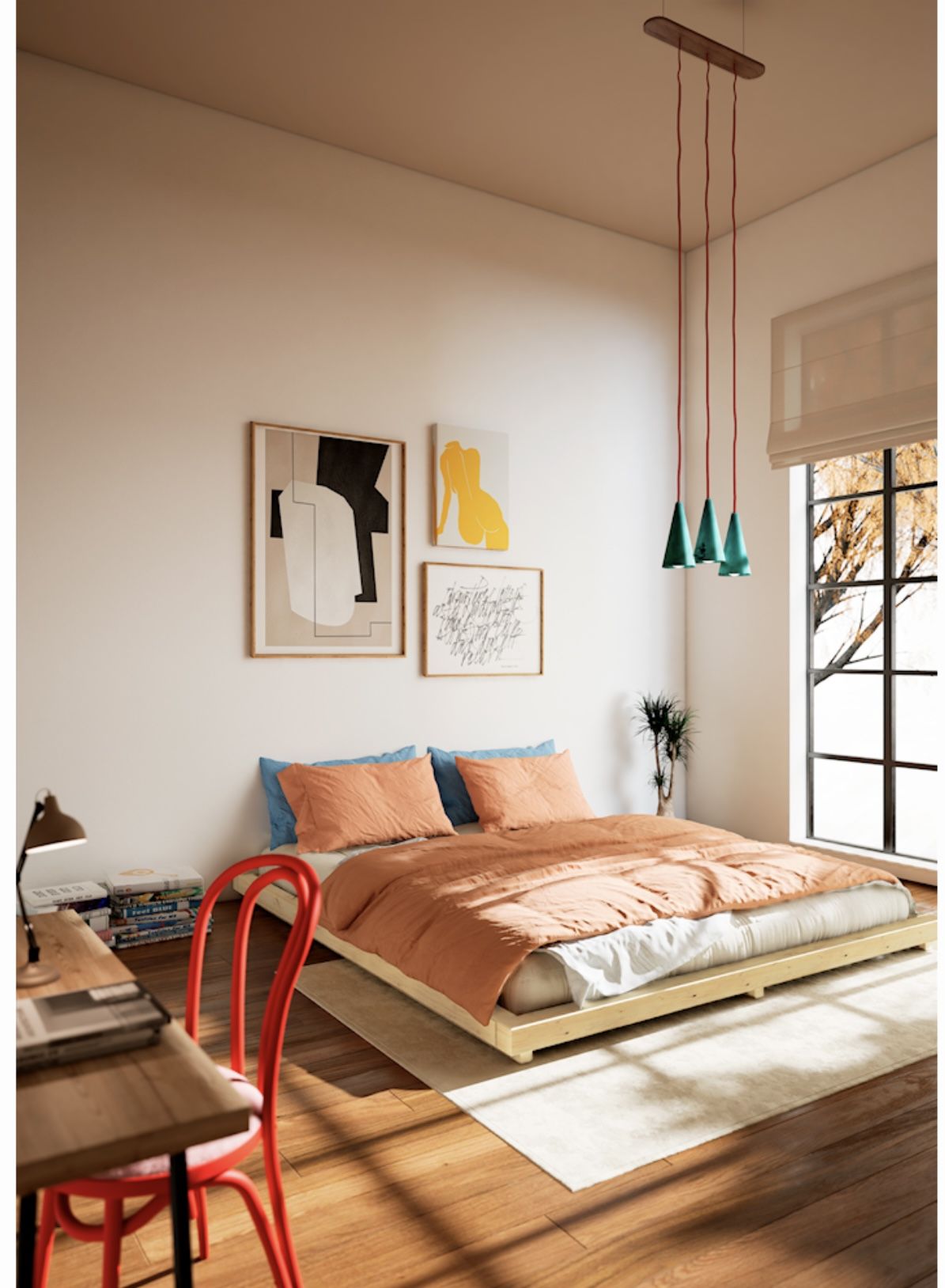
The studio apartment is, architecturally speaking, a single room asked to perform the work of several. It is a bedroom and a living room and sometimes a dining room and, increasingly, a home office — all at once, all in the same square footage, all visible from wherever you happen to be standing. For renters who cannot drill into walls or reconfigure plumbing, this creates a specific kind of pressure: how do you make a space feel organized and intentional when you cannot change the bones of it.
The answer, as it turns out, is less about accumulating the right objects and more about learning to think spatially. The renters who live most comfortably in studios are not necessarily the ones with the smallest belongings or the most disciplined minimalism. They are the ones who understand that a room can be divided without a wall, that furniture placement is a form of architecture, and that the eye can be guided toward a sense of enclosure even where none structurally exists.
What follows is not a checklist. It is an account of how that spatial thinking actually works, with specific tools that make it easier to execute.
The Problem with the Open Floor Plan
There is a certain optimism in the phrase “open concept,” as though the absence of walls is purely a feature. In practice, a studio apartment with no visual zoning tends to feel smaller, not larger. When everything is visible from everywhere, the eye has nowhere to rest. The bed is in the room. The desk is in the room. The sofa is in the room. The room is just the room.
The solution most designers reach for first is rugs — define the living zone with one textile, the sleeping zone with another. This works, and it costs nothing structurally, which matters for renters. But rugs alone rarely complete the feeling of separation. They mark territory on the floor while leaving the air above it undivided.
That is where vertical intervention becomes useful. A room divider does something a rug cannot: it interrupts sightlines. It gives the sleeping area a sense of enclosure that allows the rest of the apartment to read as a distinct space. It is not a wall, but it functions like a suggestion of one — and in a small apartment, suggestions carry surprising weight.
Choosing a Divider That Actually Stays Put
The failure mode of most budget room dividers is instability. A panel that rocks when you brush past it, or lists slowly to one side over the course of a day, undermines the sense of structure it was meant to create. It also becomes a safety concern in apartments where the floors are older and less level.
The Room Divider 6FT Portable Room Dividers and Folding Privacy addresses this through its base design rather than its weight. The powder-coated steel frame resists the kind of surface scratching that happens when a divider gets repositioned regularly — which it will, because a renter’s life is not static. The widened foot pads distribute the load more evenly, which is what keeps it from tipping when someone leans a coat on it or when a door opens nearby.
At six feet, it is tall enough to matter visually without touching the ceiling, which means it can be repositioned without marking the paint or the trim. For renters, that distinction matters more than it might seem. The entire value of a freestanding divider is its mobility — the ability to reconfigure when a roommate moves in, when working from home requires a different layout, or when you simply want the bed to face a different direction this year.
The folding mechanism also makes it storeable. When you have guests and want the apartment to read as a single open space, it folds flat against a wall. That reversibility is not a concession. It is the point.
Building a More Permanent-Looking Zone
Some studios benefit from something with more architectural weight — a divider that reads less like a folding screen and more like an actual partition. This is particularly true in apartments where the ceiling is high or the square footage is generous enough that a single freestanding panel disappears into the room.
The Room Divider (1 Panel-22in) Wall Divider for Room Separation takes a modular approach. It is designed to function as part of a larger system, which means a renter can start with a single 22-inch panel and add to it as the budget allows or as the layout demands. The two available base styles — Type A and Type B — accommodate different floor situations, which is worth noting before ordering a second or third panel to ensure they connect as intended.
The modular logic is well suited to renting because it does not require a single large upfront investment to be useful. One panel placed at the edge of the sleeping area already changes the quality of the space. A second panel, added later, extends that change without requiring a complete rethinking of the layout.
There is also something to be said for the visual register of a wall-style divider versus a folding screen. The former tends to read as more intentional — less like a temporary solution and more like a design choice. In a rental where you cannot paint an accent wall or install a built-in bookcase, that perception matters.
When the Bed Itself Is the Problem
Room dividers address the visual organization of a studio, but they do not solve the floor-plan problem at its root. In most studios, the bed is the largest object in the room, and it is almost always stationary. It sits in the same position, morning to night, day after season, taking up a third of the available floor space whether it is being used or not.
The murphy bed concept exists precisely because of this: the bed that is not present when it is not needed is the bed that gives the rest of the room permission to exist. The AMERLIFE Full Murphy Bed with Storage & Charging Station collapses the sleep function into a cabinet footprint when folded, which means a full-size sleeping surface can disappear from the room during the hours it is not being slept in.
What distinguishes this particular piece from older murphy bed designs is the integration of storage and a charging station into the frame itself. When the bed is folded up, the cabinet face provides usable storage — not hidden-away storage that requires unfolding the bed to access, but surface-level storage that functions as furniture in its own right. The charging station is built into the bed frame, which eliminates the tangle of cables that typically accumulates on a nightstand or along a baseboard.
Murphy beds require assembly and a wall anchor — the anchor point is real, but it is a single set of hardware into one wall stud, not a renovation. Most landlords consider this kind of installation acceptable under standard lease terms, and the anchor point can be patched and painted before move-out. The trade-off is significant: a studio that contains a murphy bed is, effectively, a studio that can become a one-bedroom whenever the bed is folded down and a living space whenever it is folded up.
The Space You Already Have
There is a version of small-apartment decorating that chases the feeling of more space by adding things — more mirrors, more lighting, more strategically placed objects meant to trick the eye into seeing square footage that isn’t there. That approach has limits. The eye is not easily fooled, and a room full of mirrors and clever angles is still a room full of things.
The more durable approach is subtraction and division: remove the objects that are not earning their floor space, and divide the room into zones that give each area a defined purpose. A divider that stays upright, a partition system that can grow with the layout, a bed that does not exist when it does not need to — these are not decorating tricks. They are structural decisions made with furniture instead of drywall.
A studio apartment is a constraint. But constraints have a way of clarifying what actually matters in a space, and in clarifying that, they sometimes make the space feel more considered than rooms three times the size.
Shop the post
The pieces, sourced
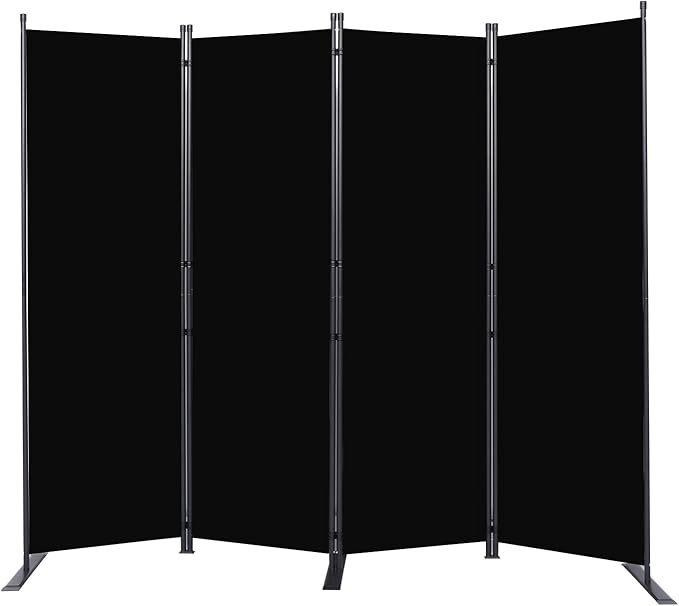
Room Divider 6FT Portable Room Dividers and Folding Privacy
$72.83 at time of writing
A powder-coated steel frame with widened foot pads keeps this divider upright on uneven floors without the wobble that plagues lighter versions. It earns its floor space by doing the work of a wall.
Shop the piece →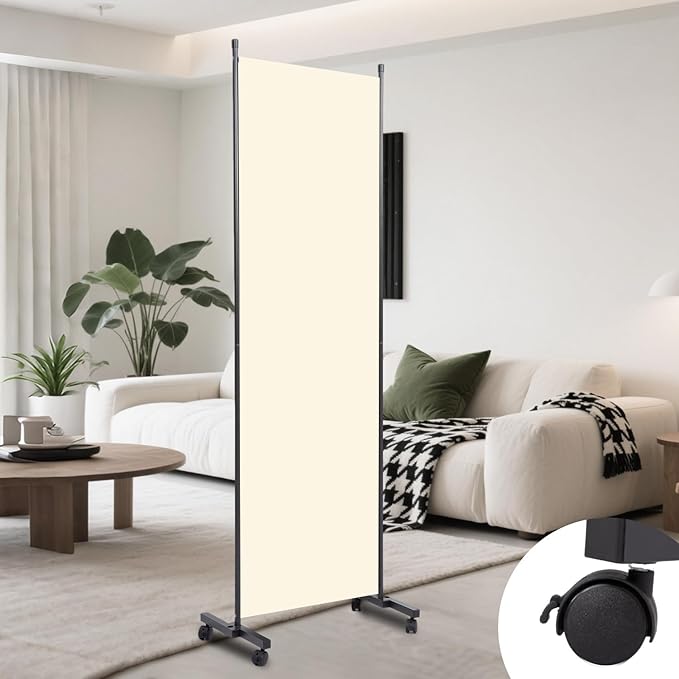
Room Divider (1 Panel-22in) Wall Divider for Room Separation
$51.11 at time of writing
A modular single panel that slots into a larger system, sold at a price that makes gradual building realistic. The two base-style options mean it can adapt to the floor plan rather than the other way around.
Shop the piece →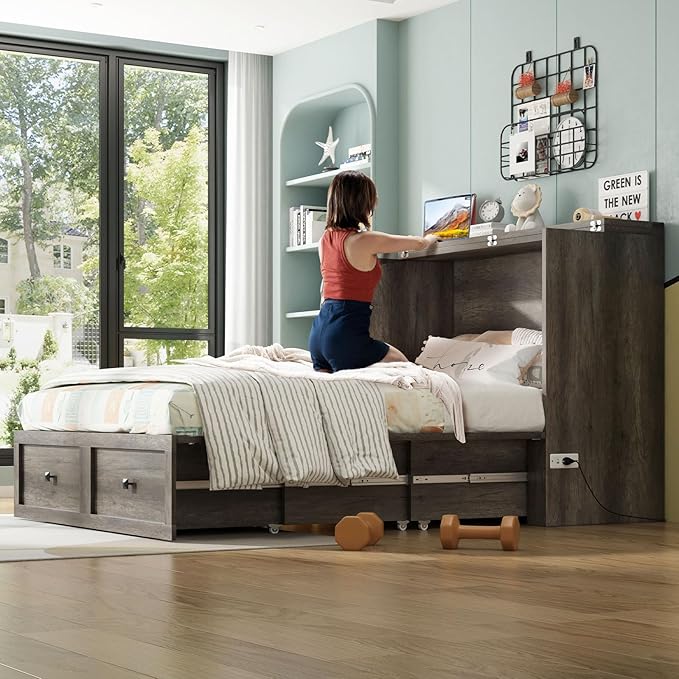
AMERLIFE
AMERLIFE Full Murphy Bed with Storage & Charging Station
See Amazon at time of writing
When folded, the cabinet face reads as furniture; when unfolded, it becomes a full bed with a charging station built into the frame. The transformation takes less time than making the bed afterward.
Shop the piece →