living
How to Make a Small Living Room Feel Considered, Not Compromised
Practical ideas for renters working with compact living rooms — covering lighting, flexible furniture, and the small decisions that quietly change how a space feels.
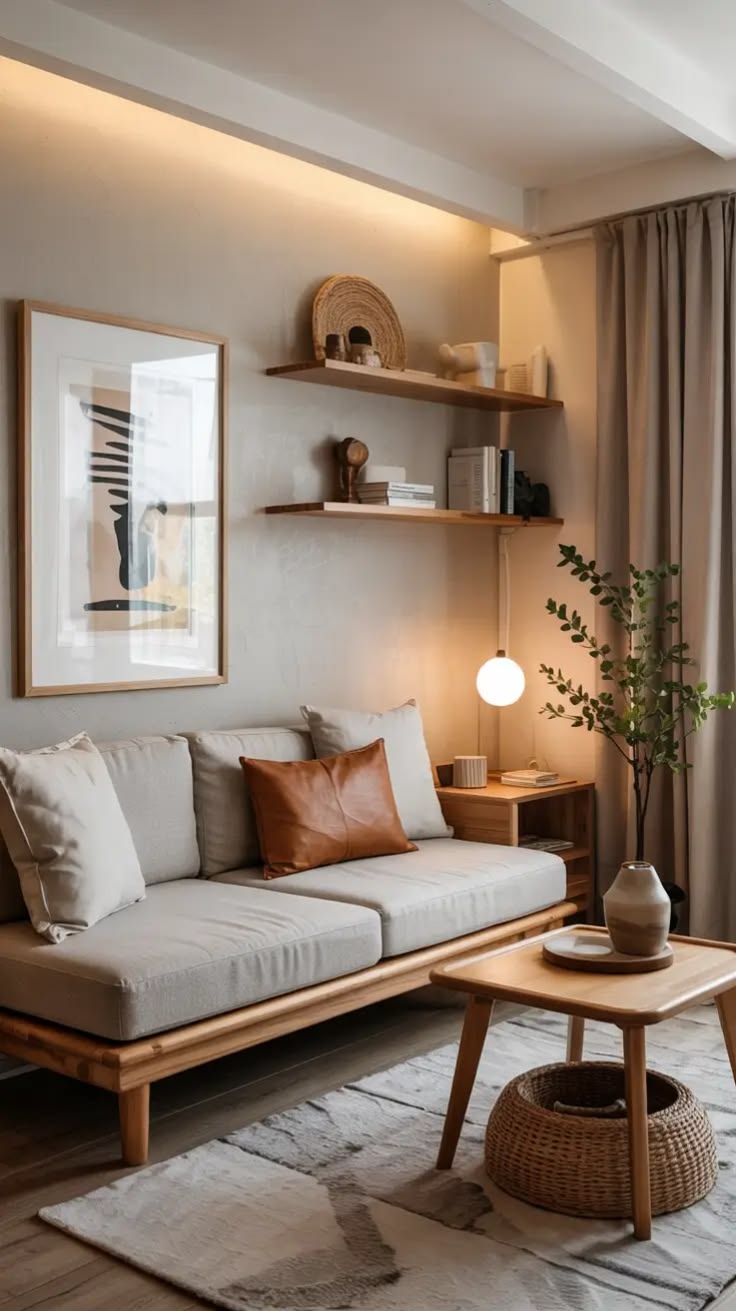
There is a particular kind of frustration that comes with renting a small apartment and trying to make the living room feel intentional. The walls belong to someone else. The overhead light is usually a single bulb in a ceiling medallion that does nothing useful. The floor plan was not designed with your sofa in mind. And yet people make these rooms work every day, not by pretending the constraints do not exist, but by finding furniture and objects that are genuinely suited to them.
What follows is less a checklist and more a way of thinking through the decisions — lighting, furniture scale, floor treatments, and the logic of pieces that do more than one thing.
Lighting is the Fastest Fix in a Room You Cannot Paint
Rental living rooms are often lit as though the goal is maximum visibility rather than any particular atmosphere. A ceiling fixture in the center of the room flattens everything it touches. It removes shadow, which is the thing that gives a space dimension. The good news is that lighting is entirely renter-reversible: you plug things in, and when you leave, you take them with you.
A floor lamp positioned behind or beside a sofa does something a ceiling fixture cannot — it creates a pool of light at human scale, oriented toward where people actually sit. The 【Upgraded】Black Arc Floor Lamps for Living Room works on this principle. The arc swings the light source out over a seating area so you get directed illumination without needing a surface to set a lamp on. In a small room, that matters. Every table surface is doing multiple jobs already.
The color temperature range on this lamp — 2700K at the warm end to 6000K at the cooler end — is wider than most people realize they need until they have it. Warm light in the evening makes a room feel closed-in in a good way, like somewhere you chose to be. The remote control is a small convenience that becomes a genuine one: you do not have to get up to adjust the mood of the room when the light outside changes.
Layering light in a small room is not about adding more fixtures. It is about making sure the light you have is doing something deliberate. One good floor lamp, a few candles, and the decision to leave the overhead off most evenings will change how the room reads more than almost any furniture swap.
Furniture That Earns Its Square Footage
Scale is the most common mistake in small living rooms, and it cuts both ways. Furniture that is too large makes the room feel overwhelmed. Furniture that is too small makes it feel unresolved, like the room is waiting for something. The question is not just size but also visual weight — how much space a piece appears to occupy relative to how much it actually does.
Low-profile furniture reads as lighter. A sofa or loveseat that sits close to the floor keeps the sightlines open above it, which makes the room feel taller and less cluttered even when the square footage has not changed. The Convertible Sofa Bed, Pull Out Boneless Couch Loveseat is useful here on both counts. The boneless construction — no metal frame, no thick armrests — keeps the profile genuinely low. And the fact that it opens into a bed with a single motion means it is doing the work of two pieces of furniture in a footprint closer to one.
For renters who occasionally host overnight guests in a one-bedroom or studio, this kind of piece removes the awkward question of where someone sleeps. The answer is already in the room. It is just also the sofa.
The coffee table is a harder decision than it appears. Most living rooms need some kind of surface between the sofa and the television wall, but a standard rectangular table in a small room quickly becomes an obstacle. The Folding Coffee Table, Mid Century Modern Coffee Table Irregular solves this by being genuinely removable. The kidney shape is not just aesthetic — the curved form navigates the space between a sofa and a chair more naturally than a corner would. And when you need the floor space back, for stretching, for a yoga mat, for a dinner party where people are standing rather than sitting, the table folds to two inches thick and disappears under the sofa.
There is something clarifying about furniture that commits to its own impermanence. It stops you from treating a layout as fixed.
The Floor Is Part of the Room
In rental apartments, the floor is usually whatever it was when you moved in. Hardwood that has been refinished too many times, or vinyl plank that does a reasonable impression of wood from a distance, or carpet that holds the history of previous tenants in ways you would rather not examine too closely. In each case, the floor covering you add is doing significant work.
A rug defines a zone in an open-plan room or a studio. It tells the room where the living area begins and ends. Without one, a small space can feel like it is all one undifferentiated thing. With one, even a modest piece of furniture arrangement starts to look considered.
The practical argument for the Art&Tuft Washable Rugs 4x6 is straightforward. A rug that cannot go in the washing machine is a rug you will spend time protecting — from wine glasses set down too quickly, from the dog, from whatever happens during a long winter of actually living in the room. A washable rug removes that protectiveness. You stop worrying about it, which means you stop noticing it in the wrong way and start noticing it in the right one.
The anti-slip backing is not a minor detail in a rental. When you cannot add rug tape to the floor without risking your deposit, a backing that holds the rug in place on its own is the difference between a rug that stays put and one that bunches at the corners by the end of the first week.
At 4x6 feet, this rug suits a small seating arrangement well — large enough to anchor the sofa, small enough that it does not fight the room for dominance. The beige colorway sits back and lets the furniture be the thing you see.
Working With What the Room Already Has
The instinct when moving into a small rental living room is often to acquire: a new sofa, a new rug, better lighting, something for the walls. Some of that acquiring is worth doing. But the decisions that actually transform a room are usually the subtractive ones — deciding what not to put in, which surfaces to leave clear, where to let the floor show.
A small room that is trying to be many things at once rarely succeeds at any of them. The living rooms that feel good in spite of their size usually have a clarity of purpose. There is somewhere comfortable to sit. There is light that responds to the hour. There is one surface to set a drink on. The floor is clean and covered with something that can be washed.
None of these things require ownership. They require the same attention you would give a room you were choosing to live in permanently — because for however long you are there, you are.
The furniture here is renter-friendly not because it is cheap or temporary-feeling, but because it is honest about its conditions. It folds. It converts. It unplugs. It moves when you move. That kind of practicality is not a compromise. In a small space, it is the whole point.
Shop the post
The pieces, sourced
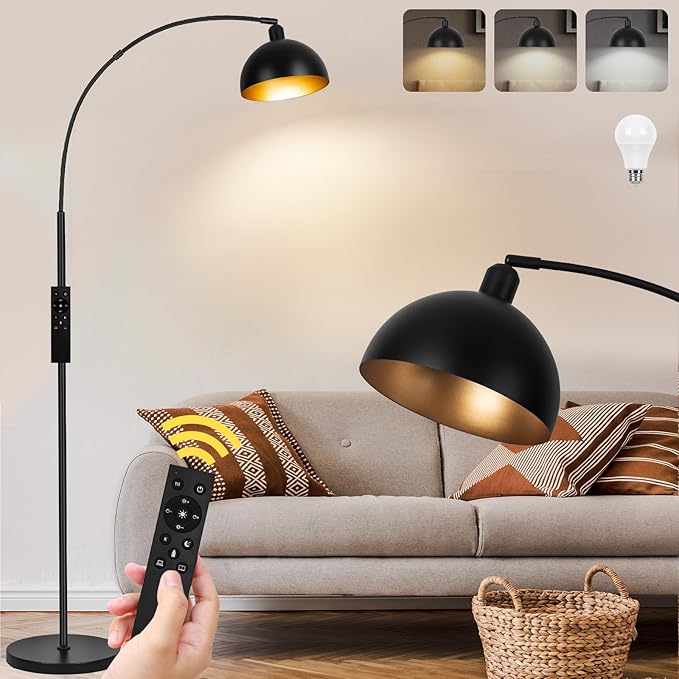
Black Arc Floor Lamps for Living Room
$63.89 at time of writing
An arc lamp earns its place in a small room by projecting light over a seating area without consuming surface space. The stepless dimming and four preset modes mean a single fixture can handle an evening of reading and then shift to something quieter without you leaving the couch.
Shop the piece →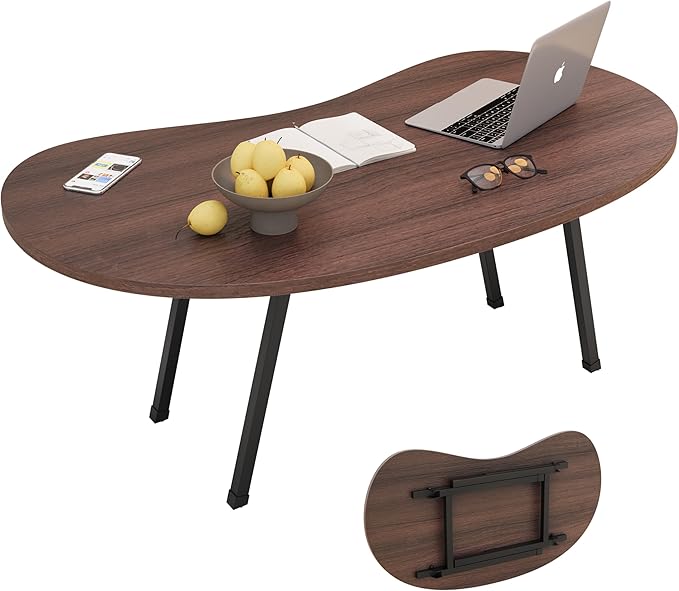
Folding Coffee Table
$71.55 at time of writing
The kidney silhouette gives this table a sculptural presence that a rectangle would not. Folded, it collapses to two inches thick — thin enough to slide beneath a sofa frame when floor space needs to be reclaimed entirely.
Shop the piece →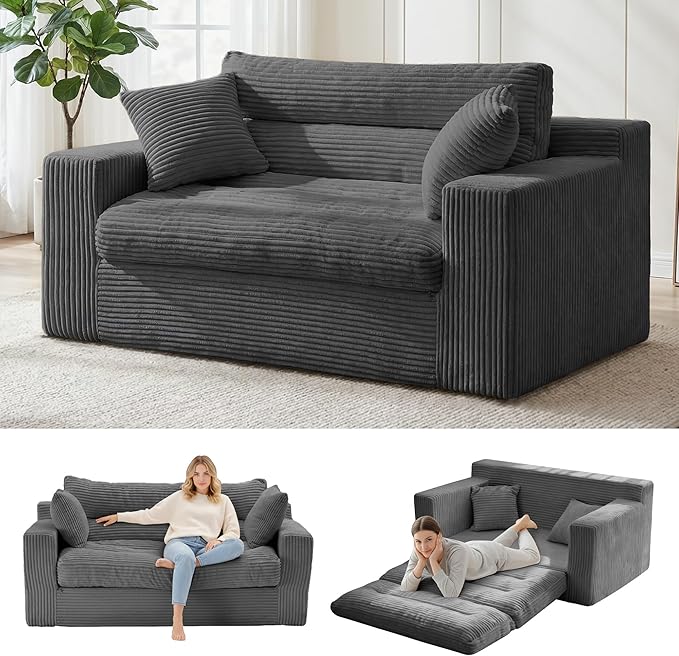
Convertible Sofa Bed
$217.25 at time of writing
A loveseat that becomes a bed with a single pull is an honest solution for apartments where the living room is also the guest room. The boneless construction keeps the profile low and the visual weight light.
Shop the piece →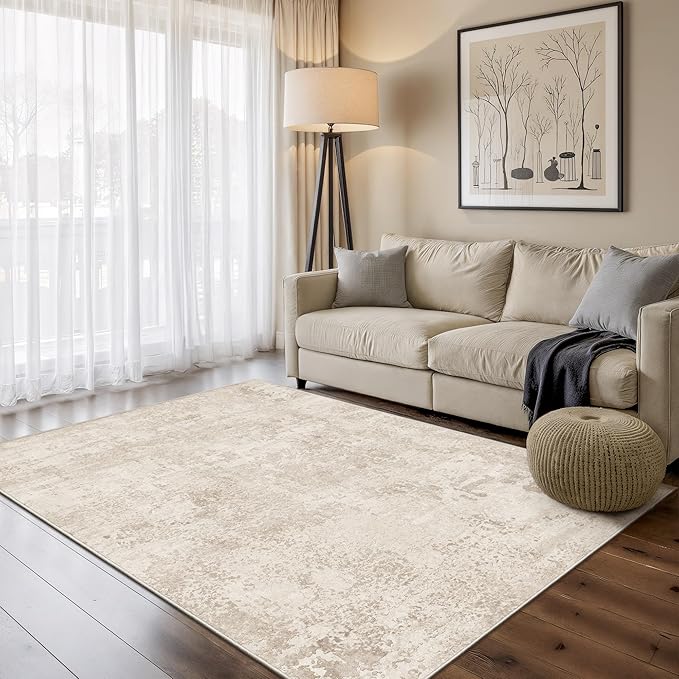
Art&Tuft Washable Area Rug, 4×6
$43.44 at time of writing
A washable rug is a practical concession to real life — the kind of purchase that stops you from being precious about the floor. The anti-slip backing matters in a rental where you cannot modify the floor itself.
Shop the piece →