kitchen
Small Kitchen Storage Ideas for Apartments
Practical strategies and honest product observations for making the most of a kitchen that was not designed with you in mind.
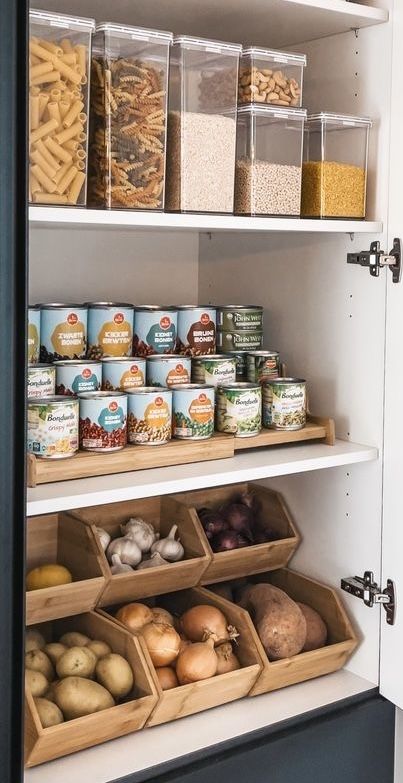
There is a particular kind of frustration that belongs almost exclusively to apartment kitchens. It is not the frustration of a bad kitchen — it is the frustration of a kitchen that was designed to be photographed in a listing rather than cooked in. The cabinets stop eight inches from the ceiling. The single drawer sticks. The pantry, if it exists at all, is a narrow closet whose shelves are spaced for cereal boxes and nothing else. You did not choose any of this, and the lease means you cannot change most of it.
What you can change is how you move through the space. The ideas here are not transformations. They are adjustments — small interventions that treat your kitchen as a set of overlooked surfaces rather than a fixed arrangement of inadequate ones.
Start With the Surfaces You Are Not Using
Counter space in a small kitchen is a contested resource. Every appliance, cutting board, and bowl of fruit is competing for the same few square feet, and the competition tends to end with things stacked on top of each other in ways that are neither safe nor convenient. Before buying anything, it is worth looking at which parts of the counter you are actually using and which parts you are simply tolerating.
Corner counters are the most consistently wasted. They are awkward to reach across, too shallow to stack anything stable, and usually end up holding a fruit bowl that has migrated there by default. A tiered shelf changes the geometry without taking up more floor space. The 3-Tier Corner Shelf Counter and Cabinet Organizer works on the logic of going up rather than out — three bamboo tiers occupy roughly the same footprint as a large cutting board while giving you the equivalent of a small section of open shelving. Plates, spice jars, a small plant, the olive oil you reach for every other day: objects that were previously stacked into unstable arrangements can now sit at different heights with actual air between them.
Bamboo as a material has a way of registering as considered rather than utilitarian, which matters more than it might seem when the kitchen is also visible from the living room, as it almost always is in an apartment.
The other surface most small kitchens squander is the wall beside or above the range. Knife blocks are one of the larger items on a counter, and they tend to attract clutter — loose twist ties, a pen, a wine cork — in the way that any horizontal surface will. Moving the knives to the wall removes the block entirely. The HOSHANHO Magnetic Knife Strips use a strip of acacia wood to do something that bare magnetic strips do not quite manage: they look as though they belong in the kitchen rather than in a mise en place setup at a culinary school. Two rows of embedded magnets run the full length of the strip, which means even a larger chef’s knife holds without the slight anxiety that comes with cheaper single-row versions. The installation requires two screws, which is the kind of modification most landlords consider normal wear and the kind that requires nothing more than a small bit of wall-patching compound when you leave.
The Door as a Pantry
Rental kitchens rarely have enough pantry space. The solution that gets offered most often — a freestanding pantry cabinet — works in larger apartments and is impractical in smaller ones, where it simply shifts the problem of crowding from inside the kitchen to the middle of it. A more honest answer is to look at the door.
The back of a cabinet door or the pantry door itself is a vertical surface that is almost always empty. An over-door organizer takes that surface seriously. The Over the Door Pantry Organizer 3 Tier Hanging Basket hangs from hooks that sit over the door’s top edge — no drilling, no hardware beyond what ships in the box, and no permanent modification to the door or frame. The baskets are black powder-coated metal, which is the kind of finish that photographs well and cleans easily, and the three tiers are deep enough for canned goods, boxed pasta, or the collection of vinegars and oils that tends to multiply without a designated home.
The one practical note worth passing along: the hooks are designed for doors up to about two inches thick, and the door needs a small gap at the frame to close fully once the organizer is in place. Standard interior apartment doors clear both requirements, but it is worth measuring a hollow-core door before ordering if yours seems unusually thick.
Once the door is carrying some of the pantry load, the cabinet shelves themselves become less crowded, which creates a different problem: the objects pushed to the back during the last reorganization are now harder to justify ignoring.
The Depth Problem in Cabinets
Deep cabinet shelves are a storage paradox. They offer significant volume, and most of that volume is inaccessible. Things get pushed to the back during a reorganization, forgotten, and eventually discovered during a move. The front half of the shelf does all the work, and the back half stores things you have effectively lost.
A turntable is a low-technology answer to this, and it works better than the alternatives — pull-out drawer inserts require drilling or adhesive, and rearranging the shelf layout requires more time than most people spend on it. The Set of 4, 10 Inch Non-Skid Lazy Susan Organizers come in a set of four, which is enough to address a small kitchen’s full cabinet run in a single order. Each turntable has a nine-inch usable diameter and a non-skid base, so it stays in place when you spin it and when you don’t. The set of four is the detail that makes the most practical sense — buying one turntable for the spice cabinet is easy; buying four means you can also address the cabinet where the oils live, the one with the canned goods, and the one under the sink where the cleaning products always fall over.
The turntable does not organize anything. It makes what you have already organized easier to reach, which is a more modest claim and a more reliably useful one.
On Permanence and Restraint
There is a version of small-kitchen organization that is itself a form of accumulation — more hooks, more bins, more trays, until the kitchen has been fully optimized and is somehow more cluttered than it was. The point of these particular adjustments is not to fill every surface and door but to make better use of the surfaces that were already going to waste.
A corner shelf where there was nothing. A door where there was a bare painted panel. A wall where a knife block used to sit. A cabinet shelf where the back third was never touched. None of these are dramatic interventions. They are the kind of changes that take an afternoon and then disappear into the background, which is exactly where good storage should go.
The kitchen does not need to be larger. It needs to work with you rather than against you, which is a different problem and a much more solvable one.
Shop the post
The pieces, sourced
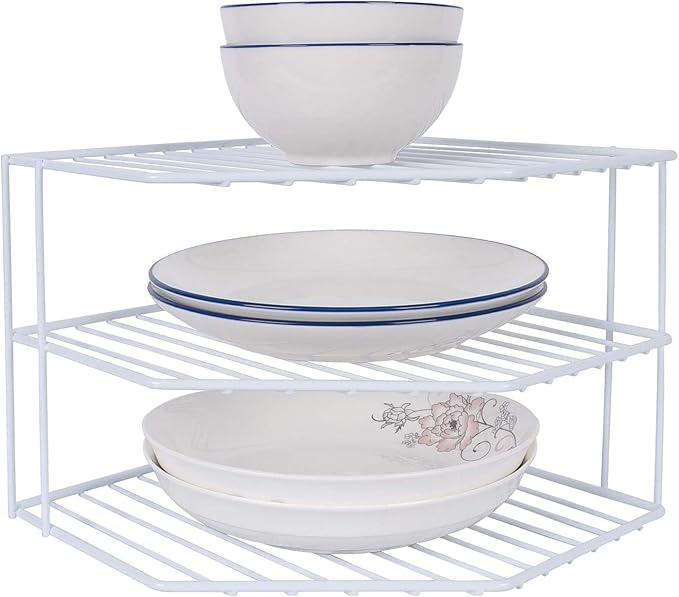
3-Tier Corner Shelf Counter and Cabinet Organizer - Countertop
$31.94 at time of writing
A bamboo corner shelf that converts the dead triangle of counter real estate beside the stove or sink into three usable tiers. Neutral enough in finish to sit alongside nearly any rental-kitchen aesthetic without demanding attention.
Shop the piece →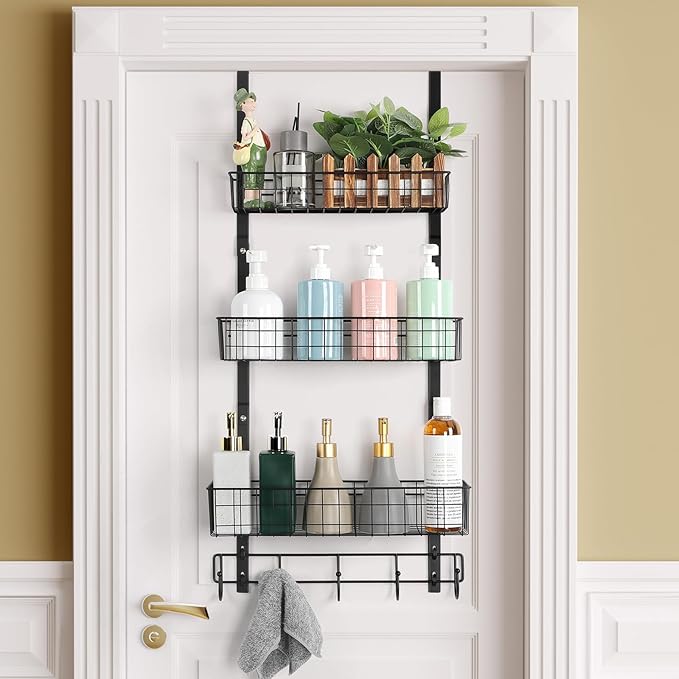
Over the Door Pantry Organizer 3 Tier Hanging Basket Back Door
$33.20 at time of writing
A three-tier metal basket that hooks over a standard door without drilling, reclaiming a vertical plane that would otherwise hold nothing but paint. The black finish reads as intentional rather than provisional.
Shop the piece →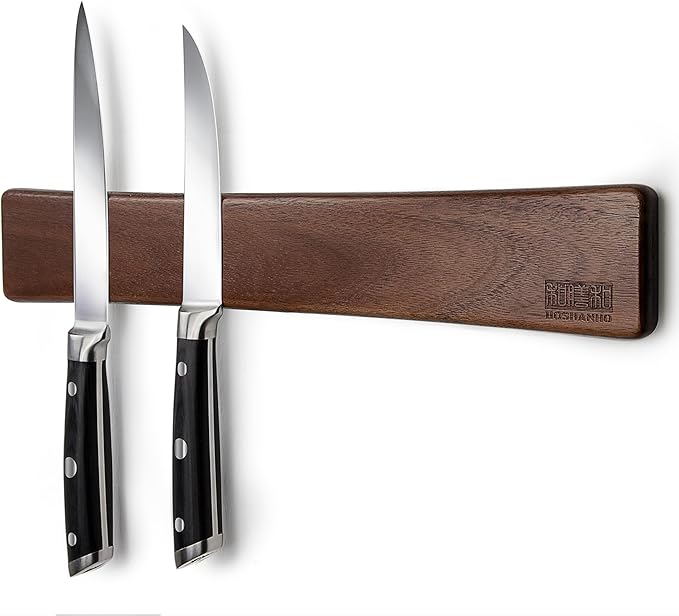
HOSHANHO Magnetic Knife Strips
$48.55 at time of writing
Acacia wood over two rows of embedded magnets, mounted to the wall where a knife block would otherwise occupy a significant footprint of counter. The hold is strong enough that you stop worrying about the cleaver.
Shop the piece →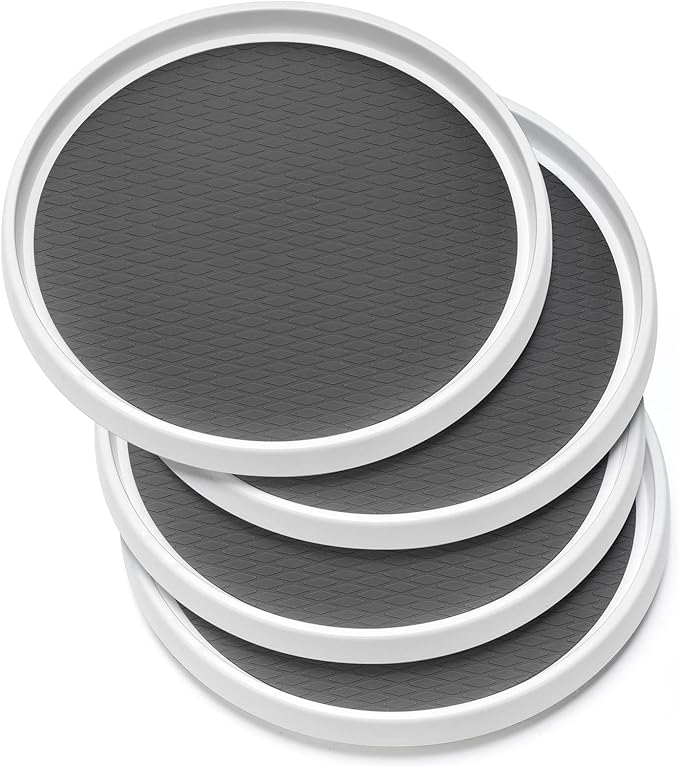
Set of 4, 10 Inch Non-Skid Lazy Susan Organizers - Turntable
$25.55 at time of writing
Four non-skid turntables that bring the back of a deep cabinet shelf within reach without requiring you to empty the shelf first. The nine-inch usable diameter fits a standard cabinet bay without crowding the perimeter.
Shop the piece →