living
Small Dining Table Ideas for Apartments That Actually Work
How to create a real dining space in a small apartment — from drop-leaf tables to folding setups that disappear when the meal is over.
The Problem With Dining in a Small Apartment
Most apartments under 700 square feet are not designed with dining in mind. The kitchen is a galley. The living area doubles as everything else. And the space where a dining table might go is already doing two or three other jobs — home office, landing zone, staging area for things you meant to put away last week.
The instinct, when confronted with this reality, is often to give up on dining altogether. A coffee table and the couch. Meals balanced on a lap. This works, for a while. But there is something that erodes slowly when you stop sitting upright at a table to eat — a loosening of the small rituals that make an apartment feel like a home rather than a place you sleep.
The better instinct is to work with the constraint rather than around it. A dining table in a small apartment does not need to behave like a dining table in a house. It does not need to be out all the time. It does not need to seat six. It needs to seat you, and occasionally a few people you actually want to cook for, and then it needs to get out of the way.
What Folding Tables Get Right (And What They Get Wrong)
The case for a folding table in a small apartment is essentially the case for furniture that earns its square footage when needed and surrenders it when not. This is not a compromise — it is a different relationship with how rooms work.
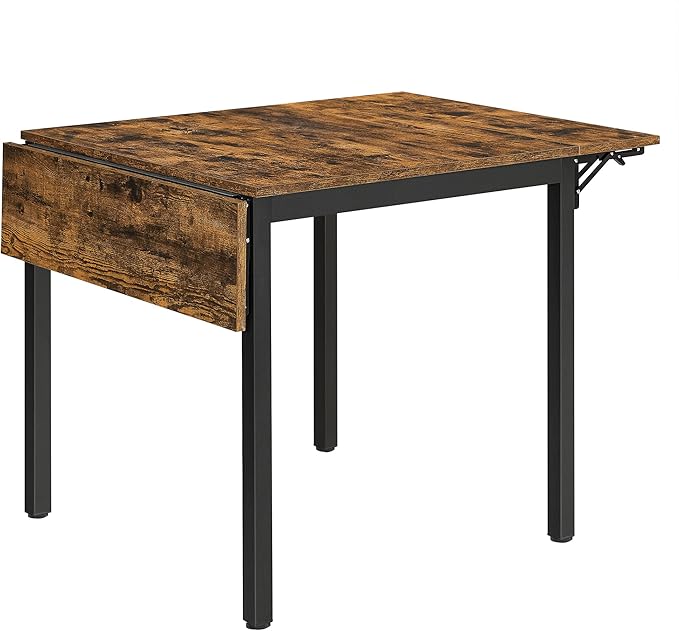
The VASAGLE Folding Dining Table operates on this principle directly. At full extension it seats four at 33 by 30 inches, which is a genuine dinner-party configuration, not a charitable interpretation of one. Fold one half down and you have a surface that seats two and reads more like a console or sideboard when pushed against a wall. The steel-reinforced engineered wood construction sits somewhere between furniture-store particleboard and hardwood in terms of heft — it has weight to it, which helps with stability, and the finish photographs darker and richer than the matte brown you might expect from this price point.
The honest drawback with folding tables is the moment of deployment. Unfolding a table while guests are standing in your kitchen is slightly awkward. The solution most people arrive at is to open the table before anyone arrives, which removes the awkwardness but also removes the point of having a folding table in the first place. The more practical approach: leave the table half-extended as its default state. It functions as a desk or a workspace at half-width, and you only need to open the second half when a meal requires it.
Seating follows the same logic. Dedicated dining chairs take up permanent floor space whether or not anyone is sitting in them. A set of folding chairs that lives in a closet or behind a door costs you nothing spatially on ordinary evenings. The Folding Chairs with Cushion are worth mentioning here because they solve a specific problem with the folding chair category: discomfort. Most folding chairs are made to be tolerated, not sat in for an hour and a half while someone tells a long story over dinner. These have a padded seat, and the triangular steel frame — double-welded at the joints — does not flex or creak under a full adult’s weight. The 450-pound load rating is partly a marketing figure, but it reflects a construction standard that holds up differently than the folding chairs you find at a party supply store. Closed, they are about three inches wide. A pair fits behind most doors.
The Case for a Drop-Leaf Table as a Permanent Fixture
Folding tables suggest impermanence. Drop-leaf tables suggest something closer to a decision. They are permanent furniture with a flexible footprint — a different proposition that suits a different kind of apartment dweller.
The distinction matters practically. If your apartment has a defined eating area — a corner of the kitchen, a wall nook off the living room — a drop-leaf table at minimum extension can live there year-round and read as a settled, intentional piece of furniture. When the leaves are down, it fits the space. When they are up, it expands to meet whatever you need from it.
The HOMCOM 55” Solid Wood Kitchen Table works well in this configuration. Both leaves fold independently, so you can raise one side and leave the other down if you are eating with one other person or using the table against a wall. Fully extended, it seats four to six — which is more than most small-apartment dinner parties require, but it is a ceiling that is rarely a problem. The solid wood construction means it ages differently than engineered wood surfaces: it marks and scratches in ways that read, over time, as character rather than damage.
At $125.99 it is the least expensive of these three options, which seems counterintuitive given that it is also the most structurally substantial. The assembly is moderate in complexity — the hinge hardware requires patience — but the result feels settled in a way that flatpack furniture sometimes does not.
Finding the Right Configuration for Your Space
There is no universal answer to how a small apartment should handle dining. The right table depends on how you actually live, not how you imagine you might live.
If you eat alone most of the time and host occasionally, a folding table kept half-closed and a pair of chairs stored out of sight is probably the most honest configuration. The table does not assert itself on evenings when it is not needed. When it is needed, it expands without drama.
If you eat with a partner regularly and want the dining area to feel like a proper part of the apartment rather than a deployable feature, a drop-leaf table that stays up functions better. It gives the room a settled quality. The leaves come down when you need the floor space, but the table itself stays — it becomes furniture in the way a sofa is furniture, present and accounted for.
The question of chairs is almost always secondary but deserves attention. Folding chairs stored in a closet are invisible when not in use, which is an advantage. But they require a closet. If storage is your binding constraint, chairs that stack or hang — or a bench that slides under the table — may be a better fit than anything that folds individually.
Eating Well in a Small Space
There is a version of small-apartment dining that looks like deprivation — the coffee table, the couch, the resigned acceptance that a proper table is for people with more square footage. And then there is a version that looks like considered living: a table that earns its place, chairs that disappear when the meal is over, a room that can hold a dinner party and also hold everything else it needs to hold.
The difference between those two versions is mostly furniture that knows what it is supposed to do. A folding table that actually folds flat. Chairs that stack without toppling. A drop-leaf surface in real wood that grows with the occasion and shrinks back afterward.
None of this requires a lot of money or a lot of space. It requires paying attention to what you actually need from a dining area — how many people, how often, in how many square feet — and then choosing furniture that matches that reality rather than an idealized version of it.
A small apartment can have a dining table. It can be a good one. The meal at the end of it will taste the same as it would at a table twice the size.
Shop the post
The pieces, sourced
VASAGLE
VASAGLE Folding Dining Table
$161.01 at time of writing
A fold-out table that seats four when company comes and shrinks to a narrow console when they leave. The engineered wood surface reads warmer in person than the product photos suggest.
Shop the piece →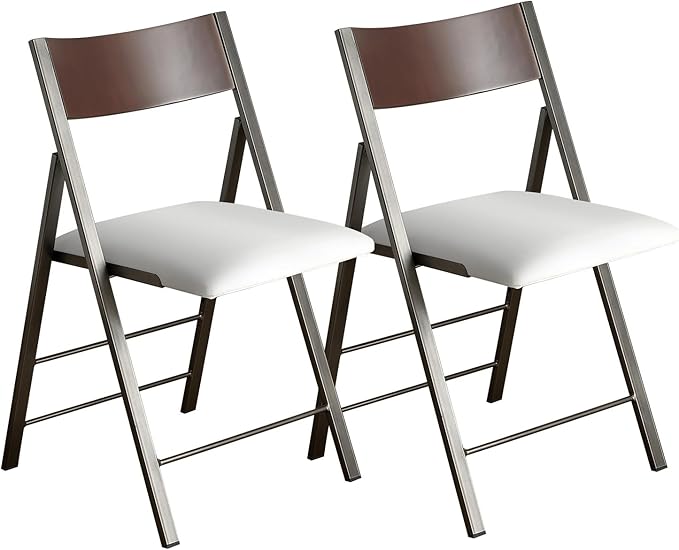
Folding Chairs with Cushion 2 Pack - Heavy Duty Steel Frame
$177.64 at time of writing
Cushioned folding chairs with a triangular steel frame rated to 450 pounds — a detail that matters more than it sounds when you are actually sitting through a long meal. They stack flat against a wall or inside a closet without ceremony.
Shop the piece →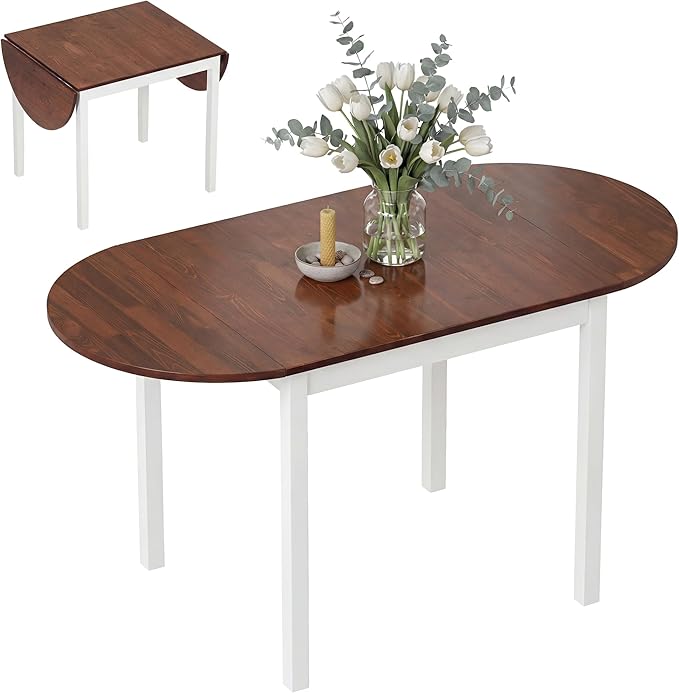
HOMCOM
HOMCOM 55" Solid Wood Kitchen Table for 4-6 People
$125.99 at time of writing
A drop-leaf table in solid wood that can seat two on a Tuesday and stretch to accommodate six on a Saturday. Both leaves fold independently, which turns out to be more useful than folding them in tandem.
Shop the piece →