bedroom
Small Bedroom Storage Ideas When You Have No Closet
Four compact dressers and storage towers that work in the tightest bedrooms — no built-ins, no permanent changes, no wasted floor space.
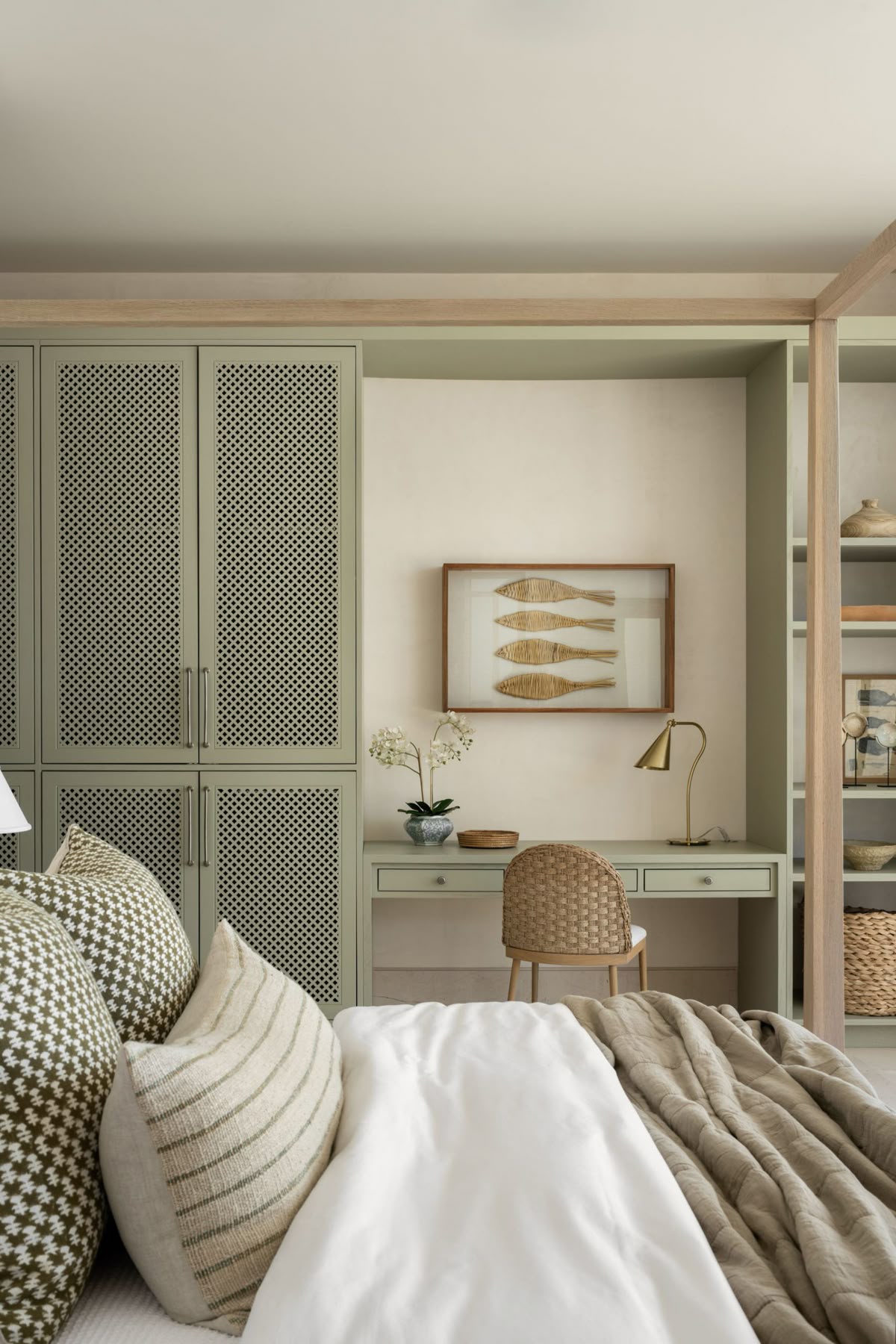
The closet is a relatively recent architectural invention. For most of domestic history, people stored their belongings in freestanding furniture — wardrobes, trunks, chests of drawers — and arranged rooms accordingly. Many older apartments and nearly all converted spaces were built under this assumption. The closet, where it exists at all, is often a shallow afterthought: a rod, a shelf, and not much else.
What follows is not a workaround so much as a return to an older logic. A bedroom without a closet is a bedroom that asks you to think carefully about volume, height, and the specific geometry of the room you actually have. The four pieces below address different versions of that problem — different room widths, different aesthetics, different budgets — without requiring a landlord’s permission or a contractor’s estimate.
Turning Dead Space Beside the Wall Into a Full Column of Storage
There is usually at least one narrow corridor in a small bedroom that furniture ignores: the gap beside the door, the few inches between the bed frame and the wall, the slim margin next to a window. These are not useless spaces. They are simply spaces that standard furniture was not designed to use.
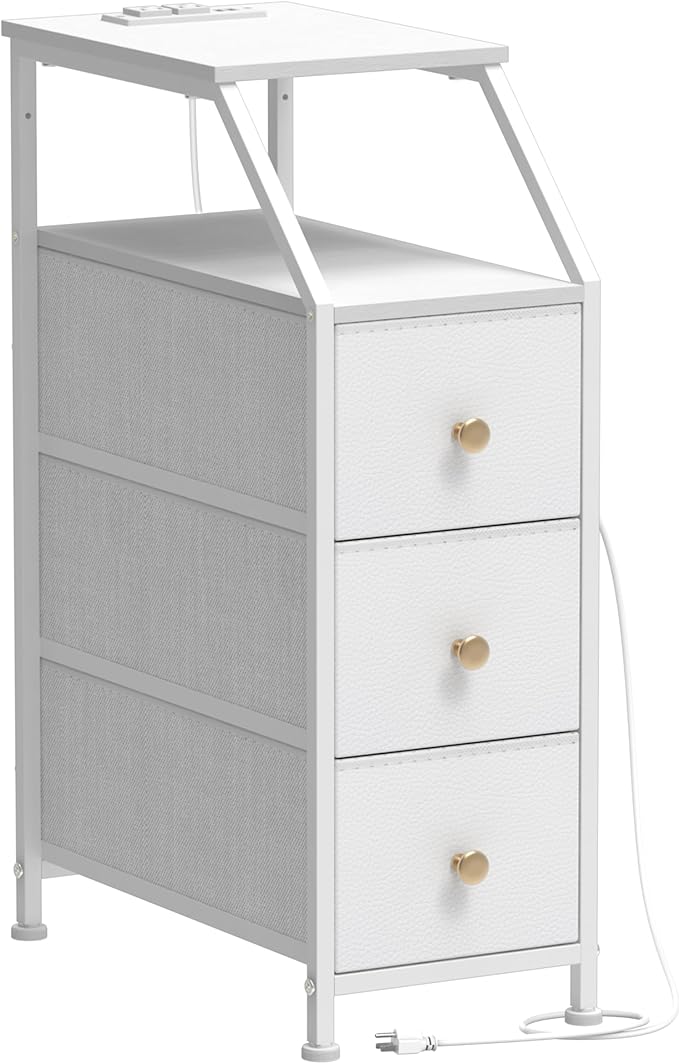
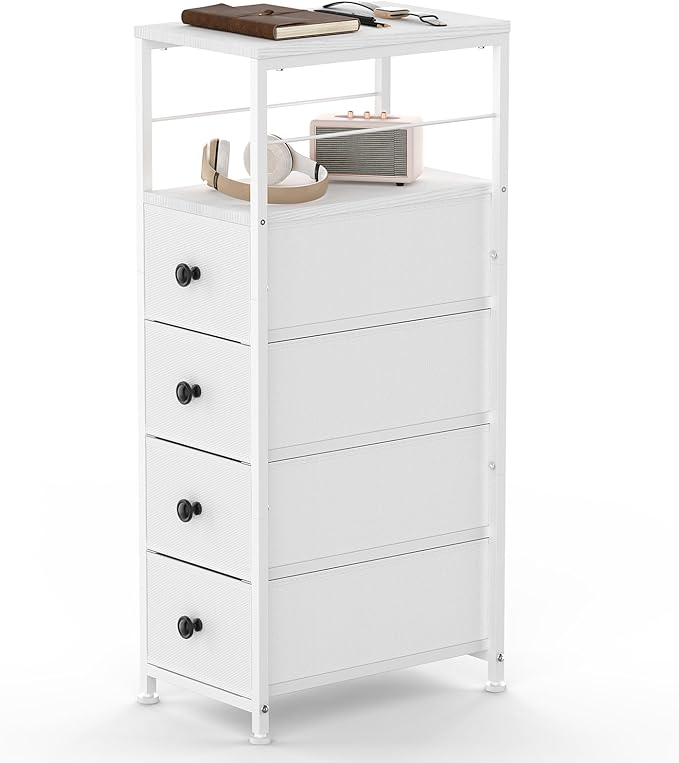
The Tohomeor Narrow Dresser Tall Skinny Storage Tower Vertical Slim was designed with precisely these gaps in mind. It rises vertically rather than spreading horizontally, which means it claims very little floor area while still offering a meaningful amount of drawer space. The fabric drawers are lighter to operate than wooden ones and do not require clearance in the way a hinged door would. In a room that already feels compressed, that distinction matters. The visual effect is more like a slim column than a piece of furniture, which tends to read as less intrusive against a bare wall. For renters who cannot install built-in shelving, a piece like this functions as a portable column of storage that moves out when you do.
A Four-Drawer Foundation That Works in More Than One Room
Some storage problems are not about geometry so much as they are about having enough drawers. A single person’s full wardrobe — shirts, folded trousers, undergarments, socks — requires a baseline of organized, covered storage that one or two drawers cannot provide. The question in a small bedroom is how to get that volume without dominating the floor plan.
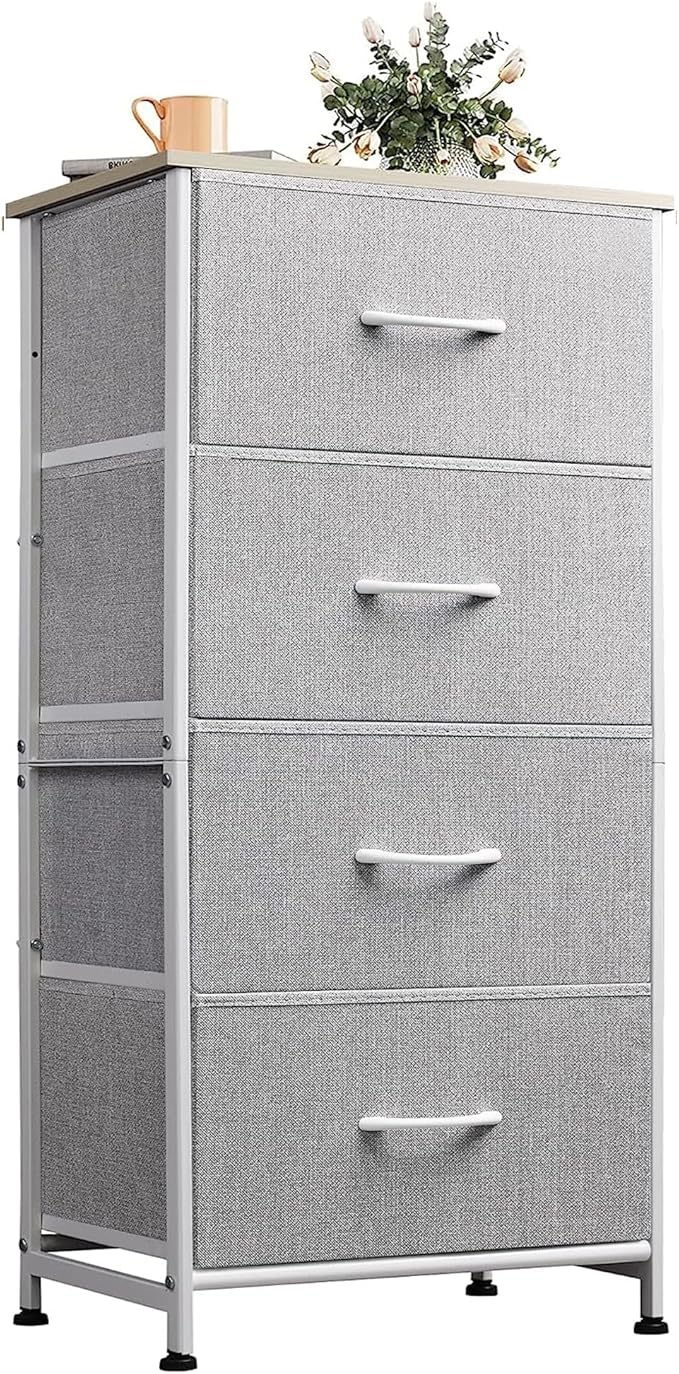
The WLIVE 4 Drawers Dresser for Bedroom answers that with a compact four-drawer configuration at a price that makes it easy to treat as functional infrastructure rather than a long-term investment. It fits beside a bed or in a corner without requiring the room to be reorganized around it. Its proportions are modest enough that two units placed side by side — a practical option the manufacturer supports across their line — create what amounts to a full dresser in a form that can be separated and reconfigured if you move. That kind of flexibility matters in rental situations, where the next apartment may have completely different constraints. The piece does not ask you to commit to a particular floor plan. It simply holds what needs to be held.
When the Storage Piece Also Needs to Read as Furniture
There is a version of the no-closet bedroom that is not just functional but considered — where the dresser is not tucked away apologetically but placed deliberately, the way a piece of furniture in a well-designed room is placed. That requires something that holds clothes and also holds its own aesthetically, which is a harder combination to find at an accessible price.
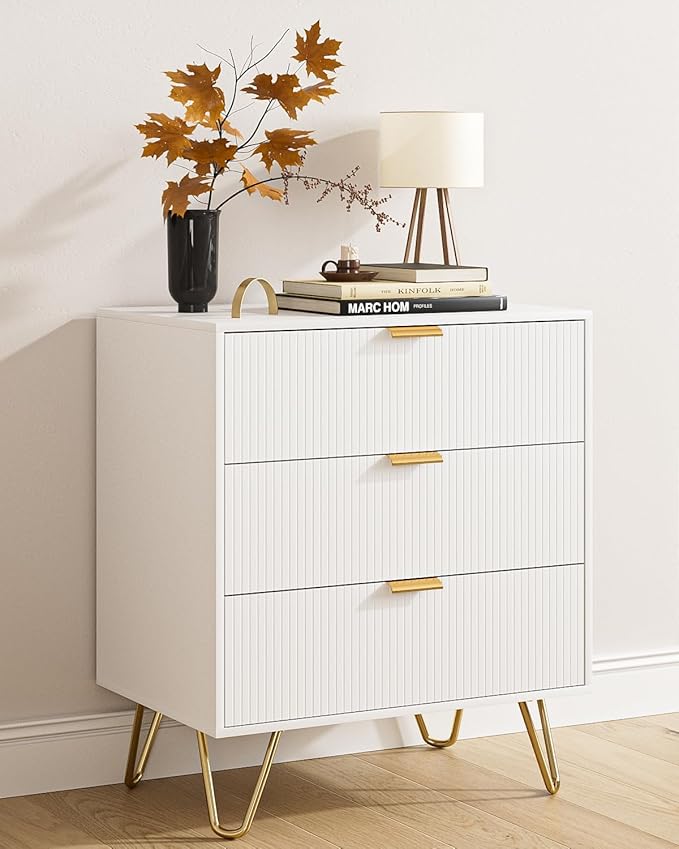
The White Dresser for Bedroom earns its place in a room through proportion and detail. The fluted drawer fronts give it texture without ornamentation, and the metal legs lift it off the floor in a way that keeps the room feeling open rather than anchored. Gold hardware, used sparingly here, suggests craft rather than decoration. The white finish is neutral enough to disappear into a light-walled room or stand gently apart from a darker one. At $128, it occupies a middle tier where the design quality begins to noticeably separate from cheaper alternatives. For a bedroom where the dresser will be seen daily and has no closet behind which to hide, that visible quality is not a luxury — it is part of how the room feels to live in.
For the Room Where Even a Narrow Dresser Seems Too Wide
Ten inches is a measurement most furniture ignores entirely. It is the kind of clearance found beside a door that swings inward, in the sliver between a bed frame and a baseboard radiator, or along the short wall of a galley-shaped room where depth is scarce but height is available. Standard dressers begin at roughly eighteen inches deep, which means that a ten-inch margin — functionally — is usually dead space.
The YBING Narrow Dresser for Bedroom was proportioned specifically for these situations. At just over ten inches wide and thirty-four inches tall, it occupies a category of space that most storage furniture cannot reach. The trade-off is drawer depth: this is not a piece for bulky sweaters. It holds the smaller categories of clothing and everyday items — socks, folded undershirts, accessories — that tend to accumulate on surfaces when there is nowhere obvious to put them. In a room already organized around a larger dresser or wardrobe, a piece this narrow adds a secondary layer of storage without competing for floor space. In a very small room that cannot accommodate anything wider, it may be the only dresser that fits at all.
The Quiet Outcome of Getting the Furniture Right
A bedroom organized without a closet tends to feel either provisional or intentional, and the difference usually comes down to whether the storage was chosen for the specific room. When each piece sits where it belongs — filling a gap, anchoring a corner, holding its own on a bare wall — the absence of built-in storage stops registering as a deficiency. The room simply looks like a room where someone made careful decisions about what goes where and why.