living
Small Apartment Plant Ideas: Indoor Planters That Work With Your Space
How self-watering planters solve the real challenges of keeping plants alive in a small apartment — limited counter space, unpredictable schedules, and the anxiety of overwatering.
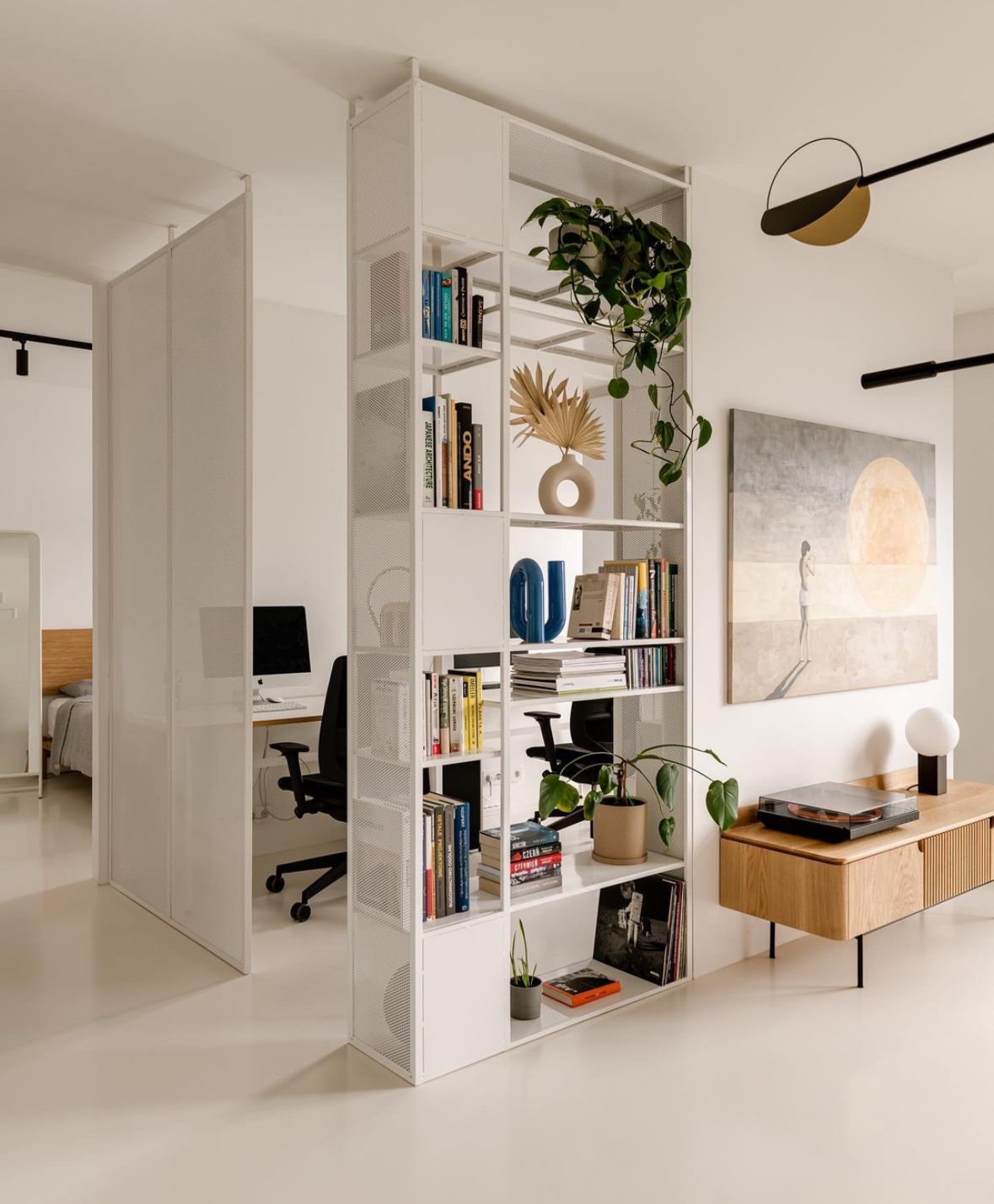
Plants have a particular way of exposing the rhythms of a busy life. Miss a few waterings and the evidence is right there on the windowsill — yellowing edges, dropped leaves, soil pulled away from the rim of the pot. In a small apartment, where every object earns its place by looking good and functioning well, a struggling plant does neither.
The constraint most people are trying to solve is not really about space. It is about time and attention — specifically, the gap between the intention to care for plants and the actual cadence of a working week. Self-watering planters address that gap directly, holding a reservoir of water and releasing it gradually through a wick or double-layer system. The result is soil that stays evenly moist without daily monitoring, which changes what it means to keep plants at all.
A Four-Pot Setup That Handles an Entire Shelf at Once
There is a certain arithmetic to building out a plant arrangement in a small space. One pot feels tentative. Four, arranged with some variation in height and leaf shape, reads as a considered decision. The challenge is maintaining four plants without that maintenance becoming its own project.
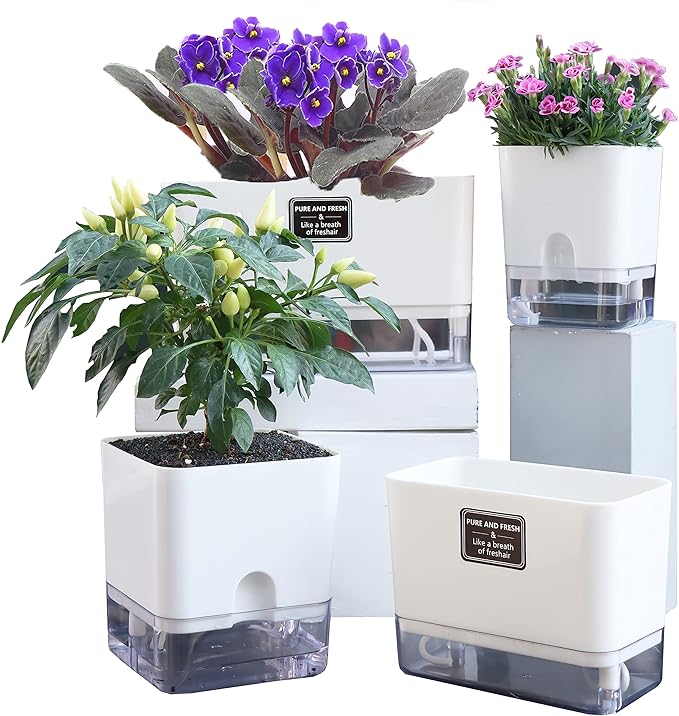
The FAMZ Self Watering Planters 4 Pack,Self Watering Pots for Indoor approaches this as a system rather than a collection of individual pots. Each planter draws water upward through a cotton rope wicked into the soil, pulling from a reservoir in the base. Drainage holes on the bottom keep roots from sitting in standing water — a problem that quietly kills more houseplants than underwatering does. At $37.14 for the set, the cost per pot is reasonable enough that filling an entire shelf feels like a practical decision rather than an indulgence. The uniform design also matters in tight quarters: a matched set reads as intentional, where a collection of mismatched pots can make a small space feel cluttered before you have even added the plants.
An Entry-Level Pot That Earns Its Place Without Commitment
Not every plant deserves an investment. Some are experiments — a cutting from a friend, a species you have not grown before, something you bought on impulse at a farmers market. What these plants need is a pot that supports them without requiring you to commit resources before you know whether the plant will survive your particular light conditions.
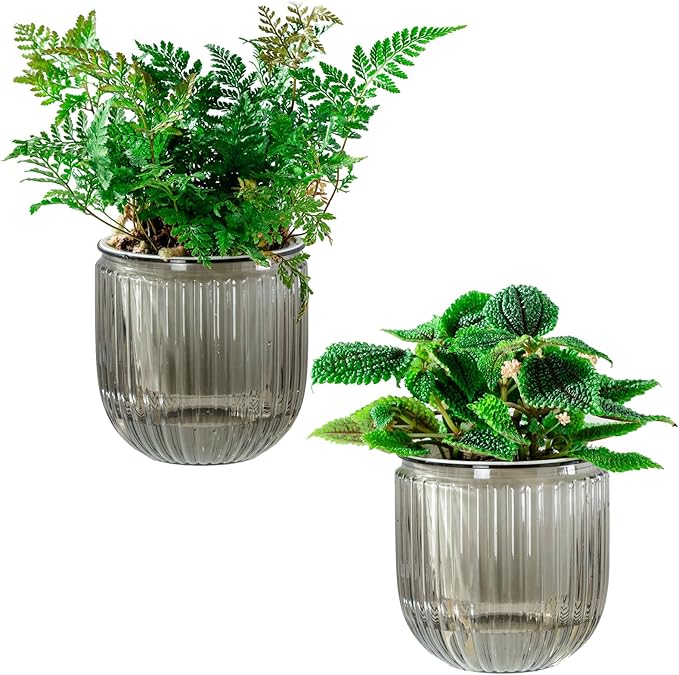
The Melphoe Self Watering Pots for Indoor Plants Planter costs $12.80. That price point is not incidental — it reflects a design that focuses on function over finish, using a double-layer construction where a cotton rope draws water from the outer reservoir into the inner pot’s soil. The reservoir holds enough water to sustain the plant for two weeks or more, which makes it particularly useful if your apartment is somewhere you leave for long weekends or work travel with some regularity. The low entry cost also means you can place one on a bathroom shelf or kitchen counter without the mental overhead of worrying about whether that location is right. It either works or it doesn’t, and the answer costs you very little to find out.
Five Windowsill Pots That Make Soil Moisture Readable
The windowsill is the most contested horizontal surface in a small apartment. It gets the best light, which makes it the obvious place for plants, but it also collects keys and mail and coffee cups and whatever else needs a temporary home near the door. A planter that takes up space on that ledge needs to justify itself — in scale, in appearance, and in how much ongoing attention it demands.
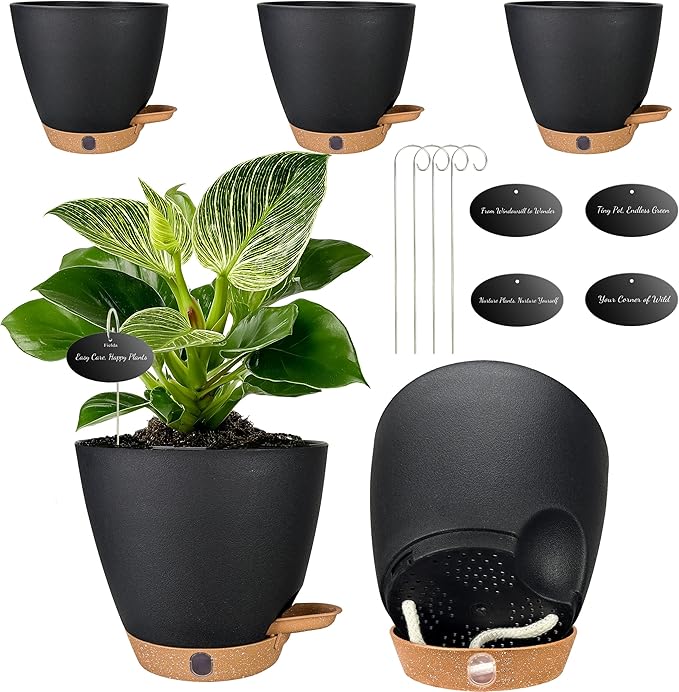
The 6 Inch Self Watering Pots for Indoor Plants(5-Pack) – Small addresses the scale question first. Six inches is a size that fits without overrunning a standard sill, and the five-pack gives you enough pots to build a proper arrangement — herbs in one run, small trailing plants in another — without the set feeling sparse. The more useful feature is the transparent water-level window built into the side of each pot. Overwatering is responsible for most houseplant failures in apartments, and it usually happens because there is no way to see what is happening below the soil surface. The window makes that information visible at a glance, which removes the guesswork that leads to either drowning a plant or leaving it too dry for too long. At $25.61 for five, the math works for a full sill installation.
A Larger Planter That Reads as an Object, Not Just a Container
There is a threshold in apartment decorating where a plant stops being an accessory and starts being a presence. That shift usually happens with scale — a larger pot on the floor or on a low table, something with enough visual weight to anchor a corner. The difficulty is finding a planter at that size that looks considered rather than functional, and that still takes care of itself between waterings.
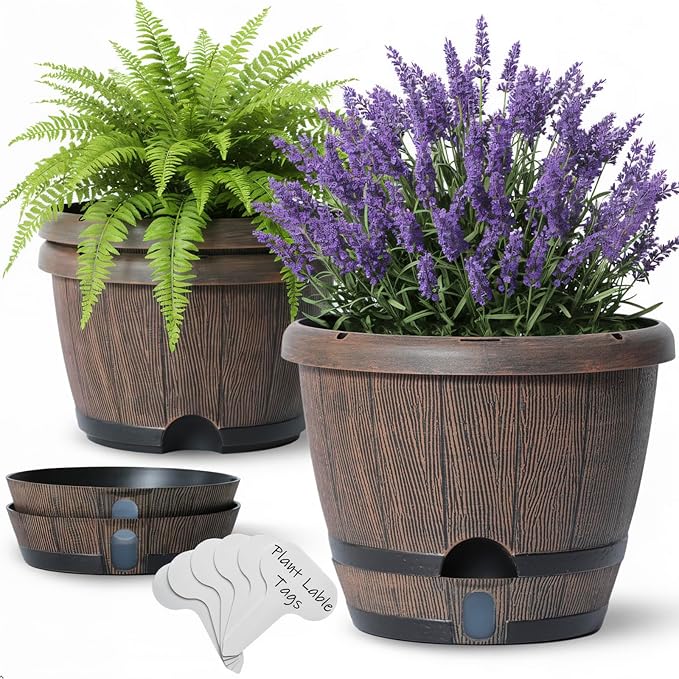
The Sun-E 10 Inch Whiskey Barrel Self Watering Planters 3Pack- Brown works at that larger register. The barrel form has a material quality — the texture and warm brown tone — that places it closer to the furniture end of the spectrum than the garden-supply end. At ten inches, it can hold a substantial herb planting or a trailing plant with room for roots to spread. The built-in reservoir operates on the same wick principle as the smaller pots in this list, typically sustaining the plant for five to seven days between refills, with a clear water-level indicator on the side so you know where you stand. The set of three, at $42.27, is a reasonable way to establish a consistent material note across a living room corner, a kitchen counter, and a balcony threshold without the pots competing with each other visually.
The Quiet Return on Getting This Right
What changes when plants actually survive in a small apartment is harder to quantify than the cost of the pots. A shelf that holds living things reads differently than one that holds objects. The light changes. The air feels different, or at least you perceive it that way. The self-watering mechanism is what makes that possible for most people — not because it requires less care, exactly, but because it converts daily maintenance into a weekly glance, which is a rhythm most schedules can actually accommodate.