rental friendly
Wall Decor That Leaves No Trace: Renter-Friendly Ideas Without a Single Drill Hole
How peel-and-stick wallpaper and adhesive tile panels can transform a rental without voiding your deposit — or leaving a single mark on the wall.
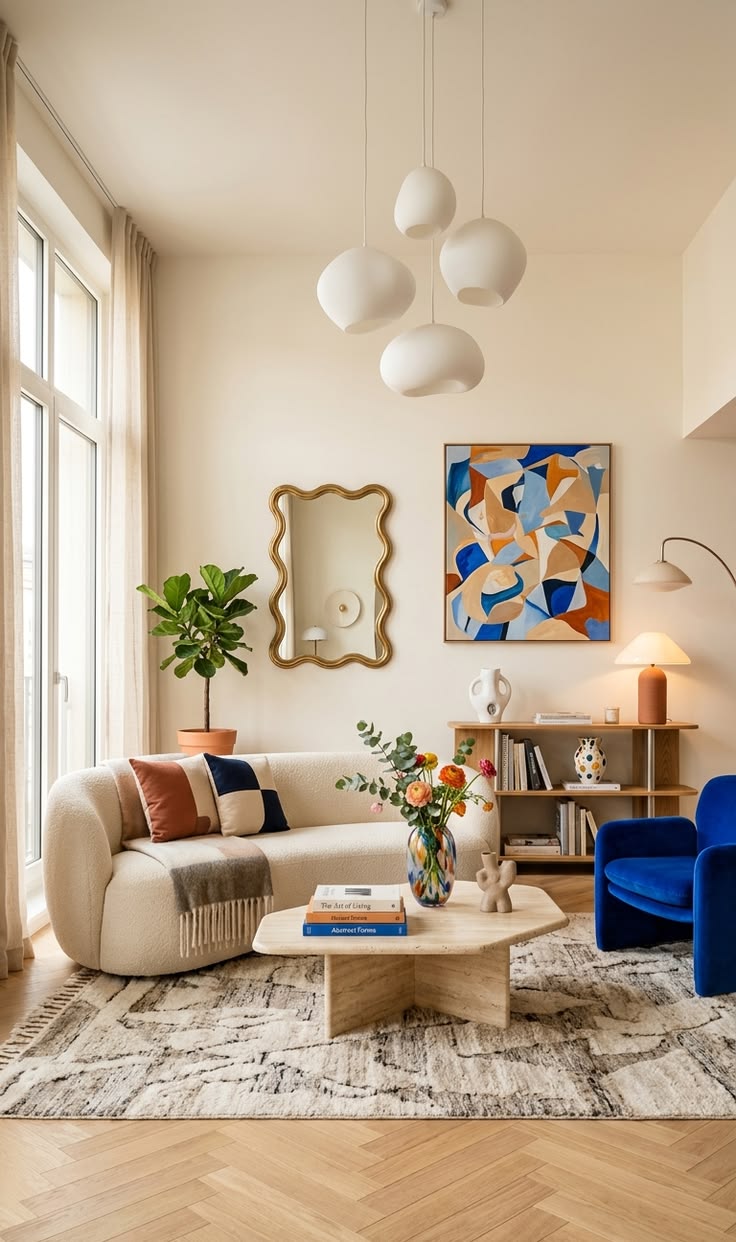
There is a particular kind of learned helplessness that comes with renting. You sign a lease, move in your furniture, and then stand in the middle of a room staring at walls the color of old typing paper, knowing that the cost of making them interesting might come directly out of your deposit. So most renters do nothing. The walls stay bare, or get a few nails that you spackle guiltily on move-out day and pray the landlord does not notice.
The category of peel-and-stick wall products has improved enough in the last several years that this calculus no longer holds. The adhesives are better. The backing materials have gotten thinner and more compliant. And the surface variety — from embossed silk textures to three-dimensional tile panels — has expanded to the point where the limiting factor is now taste, not technology.
This is not an argument for wallpapering your entire apartment. It is an argument for paying attention to a few specific surfaces and treating them with the same deliberateness you would bring to any other design decision.
Why the Accent Wall Argument Still Works
The accent wall had a moment in the early 2000s and then became shorthand for dated design thinking. That reputation is not entirely fair. The underlying logic — that one wall, treated differently from the rest, can reframe the proportions of an entire room — is sound. What went wrong was execution: colors chosen too aggressively, the treatment applied without any relationship to the furniture in front of it.
In a small rental, the accent wall argument makes even more practical sense. You are working with limited surface area. One well-chosen wall, papered in something with genuine texture or color, can do more for the feeling of a room than three coats of paint on all four walls — which you probably cannot do anyway without written permission.
The Dimoon 118”x17.7” Green Peel and Stick is a useful starting point for anyone who has not worked with peel-and-stick wallpaper before. The roll is wide enough that a single panel reads as a deliberate gesture rather than a test patch. The green is quiet — it sits closer to sage and eucalyptus than to anything tropical or graphic — which means it functions as a neutral in rooms that already have a lot happening. The plant-based construction keeps off-gassing minimal, which matters more than people acknowledge when you are in a five-hundred-square-foot apartment and the windows do not open particularly wide.
Application requires patience rather than skill. Clean the wall thoroughly, let it dry completely, and work with a second pair of hands if the ceiling height is above eight feet. The common mistake is pulling too much backing at once. Work in twelve-inch increments, smoothing as you go, and the result is clean enough that houseguests will ask whether you repainted.
Dark Walls in Small Rooms: Reconsidering the Received Wisdom
The conventional advice for small spaces is to keep walls light. The logic is that pale surfaces reflect more light and therefore make rooms feel larger. This is partially true and often overapplied. A room that is genuinely dark — north-facing, small windows, poor overhead lighting — will not be rescued by white walls. It will simply be a dark room with white walls.
Deep-toned surfaces have a different effect: they absorb the boundaries of the room rather than advertising them. A wall papered in something dark and textured can make a small room feel deliberate rather than merely compact.
The 15.7” X 118” Black Silk Wallpaper Embossed Self Adhesive Peel is narrower than most peel-and-stick rolls, which makes it better suited to specific applications — the wall behind a floating shelf, the alcove beside a fireplace that does not work, the narrow panel between two doorways. The embossed surface catches light at an angle and reads as dimensional without being aggressively textured. Against warm-toned wood or brass hardware, it pulls together a room in the way that a very good throw pillow sometimes does: you cannot always explain why it works, but it does.
The narrower width also means lower stakes for a first attempt. One roll covers a contained area, and if the result does not suit the room, removal is straightforward. Peel slowly from a corner, apply low heat from a hair dryer if the adhesive resists, and the wall beneath comes away clean.
Sheet Format Versus Roll Format: A Practical Consideration
Most people approach peel-and-stick wallpaper the way they approach traditional wallpaper: as a continuous roll. This works well on uninterrupted walls. It becomes significantly more complicated when the wall has outlets, light switches, window casings, or the kind of irregular corner that older buildings specialize in producing.
The sheet format addresses this directly. Individual panels — each one manageable, each one repositionable before the adhesive fully cures — let you work around obstacles without having to cut a long strip and guess where the interference will fall.
The Main Street Peel and Stick Wallpaper Eco-Friendly Sheets 12 Pack takes this approach. Twelve sheets, each one applied independently, covering a wall in sections rather than in a single continuous run. The low-odor formulation is a meaningful distinction if you are papering a bedroom or a child’s room, where the space is small and ventilation is not always adequate. The non-toxic materials are not marketing language in this context — they reflect a genuine difference in how the adhesive and substrate are manufactured, and that difference is detectable in the absence of that sharp chemical smell that some adhesive papers carry for weeks.
The sheet format also makes partial projects easier to justify. You do not have to commit to an entire wall. Three or four sheets arranged with some intention — behind a bed frame, flanking a window — can create the same visual weight as a full installation with a fraction of the effort and material.
The Backsplash Problem (And Why It Is Easier Than You Think)
Rental kitchens occupy their own circle of design frustration. The cabinetry is often laminate in a color chosen for durability rather than beauty. The counters are functional. And the backsplash — if there is one — tends to be the same beige ceramic tile that has been installed in rental kitchens since approximately 1987.
Replacing a backsplash is not an option in a rental. Covering it temporarily is. Peel-and-stick tile panels have improved to the point where the visual difference between a panel product and an actual tile installation is meaningful only at very close range.
The Art3d 10-Sheet Premium Stick On Kitchen Backsplash Tiles covers roughly eight square feet of surface — slightly less than the ten sheets suggest, because the panels overlap at the edges to create a continuous grid. The three-dimensional gel surface creates genuine shadow lines that flat printed alternatives cannot replicate. In a kitchen with any natural light, the relief catches and moves through the day. It looks, at a conversational distance, like actual tile work.
Installation is cleaner than a roll product because the rigid panels sit flat without buckling. The edges align precisely when the panels are measured and cut carefully. Removal, when the time comes, requires patience — working from a corner with a thin tool, applying heat if the adhesive has set firmly — but leaves the original tile beneath undamaged.
Thinking About the Room as a Whole
The constraint of renting is also, in a limited way, an invitation. Because you cannot change the permanent architecture, you pay closer attention to the surfaces and objects that you can change. The result is often a more considered interior than a homeowner might produce, because every decision is visible and every decision is yours.
Peel-and-stick products are not substitutes for renovation. They are a different category of tool — temporary, reversible, and precise in scope. Used with intention, they can change the emotional register of a room without disturbing its underlying structure. That is a reasonable definition of good decorating under any tenancy arrangement.
The walls are still there when you leave. They just do not have to look like you were afraid of them.
Shop the post
The pieces, sourced
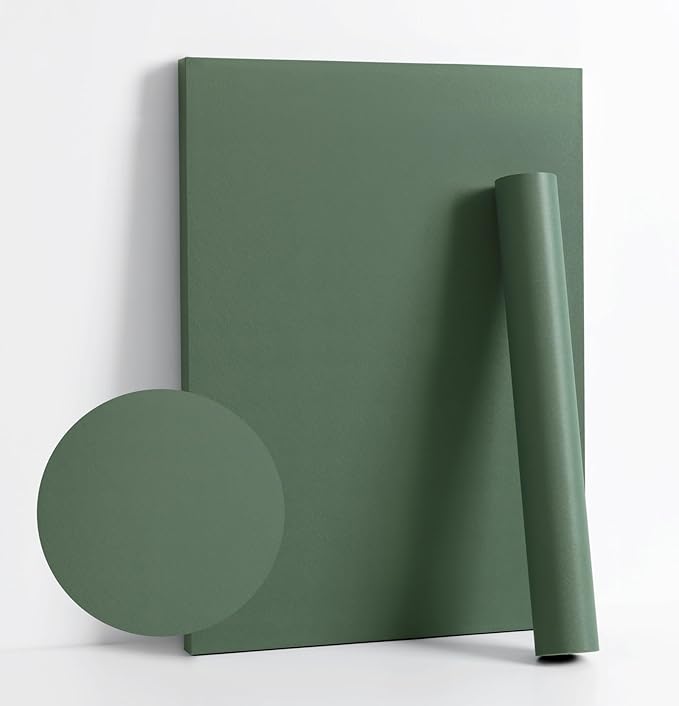
Dimoon 118''x17.7'' Green Peel and Stick
$8.96 at time of writing
A wide, plant-based peel-and-stick roll in a muted green that reads more botanical than bold. At under nine dollars a roll, it covers a meaningful stretch of wall without requiring any commitment beyond a weekend afternoon.
Shop the piece →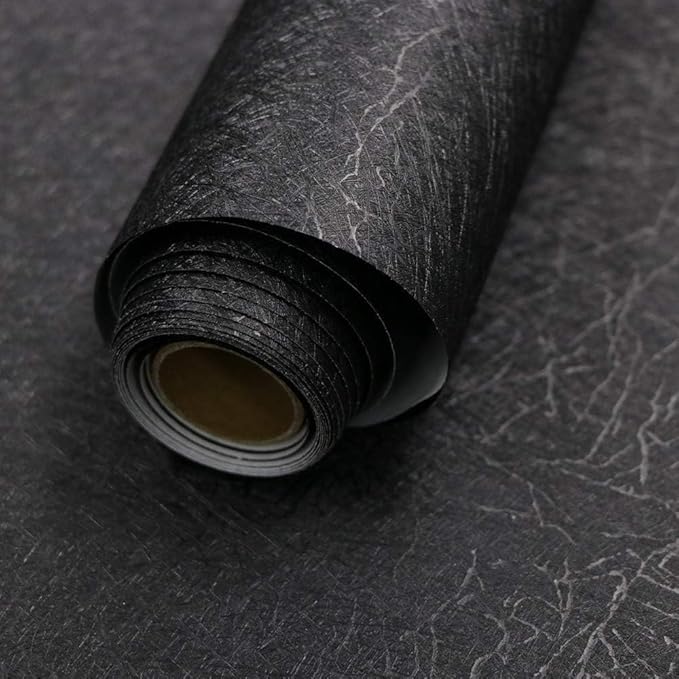
15.7" X 118" Black Silk Wallpaper Embossed Self Adhesive Peel
$7.67 at time of writing
A narrow embossed roll with a silk-like surface texture that catches light differently than a flat painted wall. The darkness reads as depth rather than weight, which makes it more useful in dim rooms than people expect.
Shop the piece →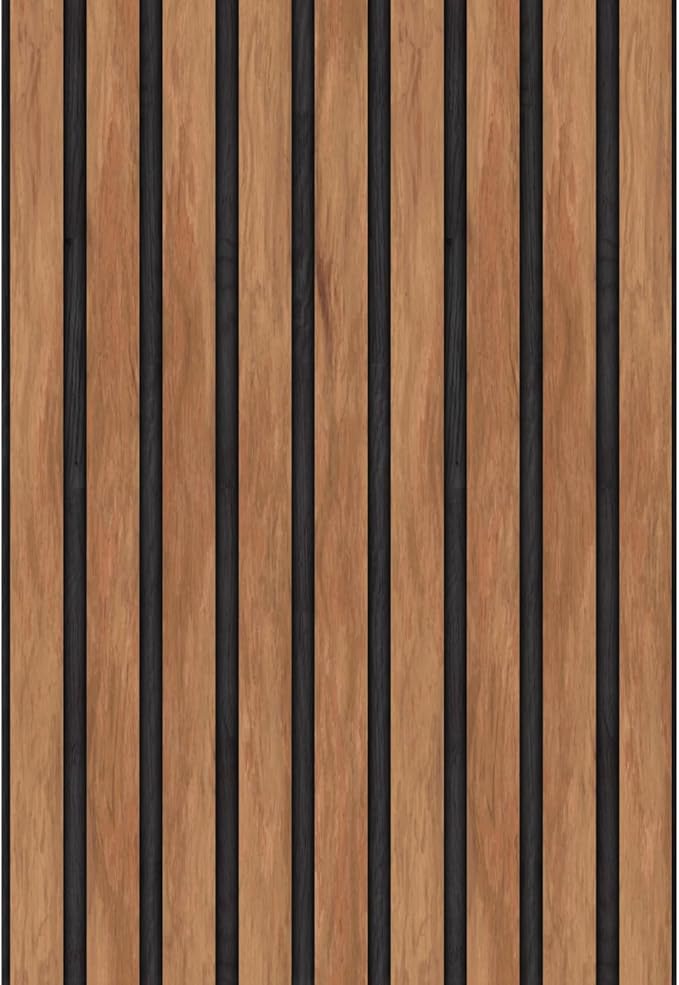
Main Street Peel and Stick Wallpaper Eco-Friendly Sheets 12 Pack
$29.34 at time of writing
Individual sheets rather than a continuous roll, which means easier repositioning and less waste when you are working around outlets or odd corners. Low-odor and non-toxic, it is the practical choice for anyone papering a room where someone actually sleeps.
Shop the piece →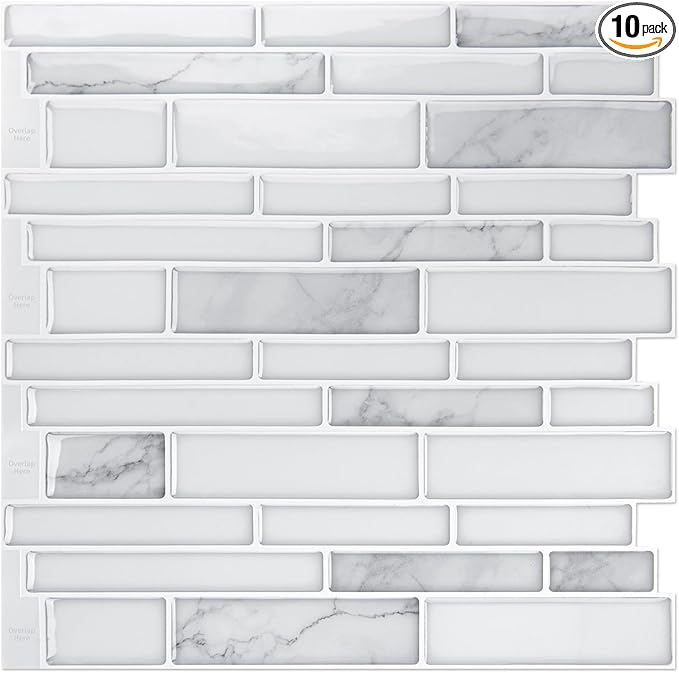
Art3d 10-Sheet Premium Stick On Kitchen Backsplash Tiles
$38.42 at time of writing
Ten sheets of three-dimensional gel-like tile panels that cover roughly eight square feet of backsplash or feature wall. The relief surface creates genuine shadow and dimension — the kind of visual interest that photographs like an expensive renovation.
Shop the piece →