rental friendly
Lighting a Rental Without Touching the Wiring
How to layer real light into a space you don't own — no electrician, no ceiling fixture drama, no damage to the walls you'll need to repatch when you leave.
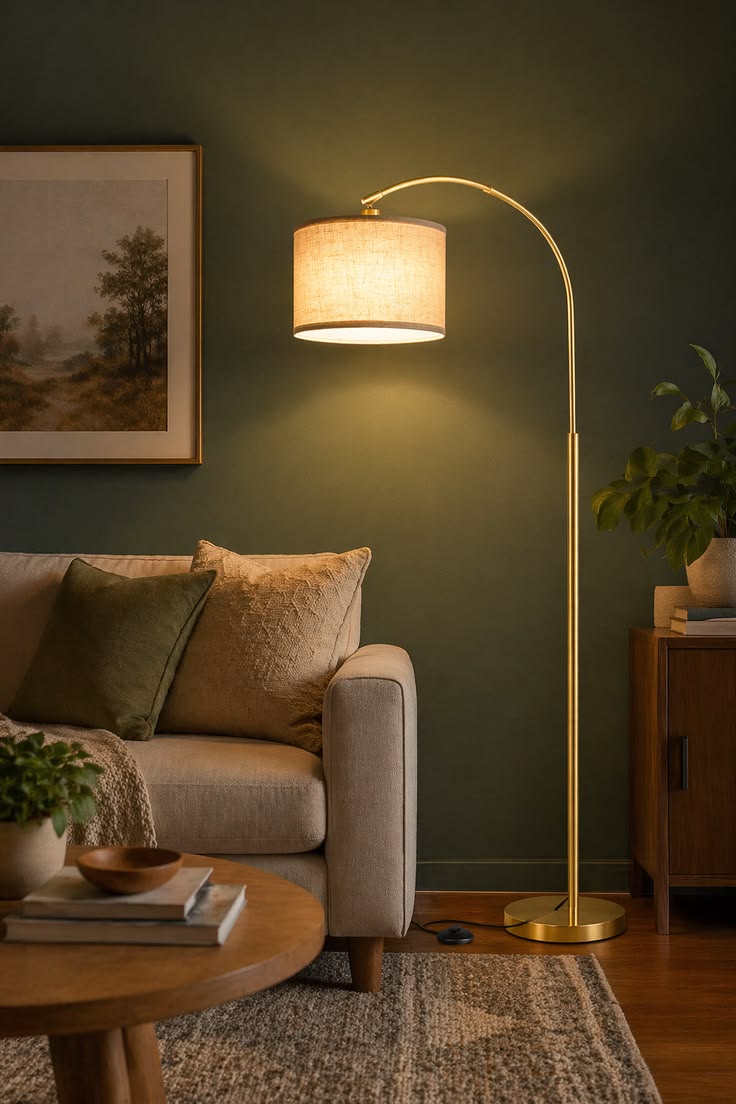
There is a specific kind of frustration that comes from moving into a new apartment and flipping on the overhead light for the first time. The builder-grade ceiling fixture, usually a dome of frosted glass bolted flush to a popcorn ceiling, produces a flat, shadowless wash that makes every room look like a dentist’s waiting area. The walls are someone else’s. The wiring is off-limits. And yet you have to live here, probably for at least a year.
The good news is that the category of plug-in and battery-powered lighting has matured considerably. What used to mean a sad clip light or a motion-sensor puck from a drugstore now encompasses proper wall sconces, torchiere lamps with intelligent dimming, and fixtures that would look deliberate in a room you actually owned. The constraint of not hardwiring turns out to be a useful design problem: it forces you to think about where light comes from, and why, rather than simply switching on whatever the last tenant left behind.
Why Overhead Light Is Usually the Problem
Lighting designers have a phrase for the kind of illumination produced by a single centered ceiling fixture: they call it “institutional.” The light source is too high, too direct, and too singular. It eliminates shadow entirely, which is precisely what shadow does to make a room feel like a room rather than a stage set. Every decorating decision you’ve made — the textured throw, the stack of books on the side table, the ceramic vessel you carried home from a market — depends on light hitting it from an angle to be visible at all.
The practical solution is not to improve the overhead fixture. It is to stop relying on it. Once you introduce two or three lower, warmer sources and let the ceiling fixture become a secondary option rather than the default, the room changes in a way that photographs can’t fully capture. You feel it when you walk in.
This is the whole project of rental lighting: building a layer of light at eye level and below, using sources you can plug in, move, and take with you.
Working the Walls
Plug-in wall sconces exist in a strange middle territory between furniture and architecture. They attach to the wall and read as permanent fixtures, but they route a cord to an outlet like any lamp. The effect, when managed well, is remarkably convincing.
The Modern Brass Plug-in Wall Sconces Set of Two Fabric Shade represents the higher end of this category, and the price reflects it. At $191.69 for the pair, they are an investment for a rental, but they are also the kind of thing that moves with you and looks intentional in every apartment you’ll ever have. The brass arm and fabric shade create a silhouette that registers as a design object rather than a compromise. The cord, which drops visibly to the outlet, benefits from a cord cover or careful routing behind furniture — not invisible, but manageable.
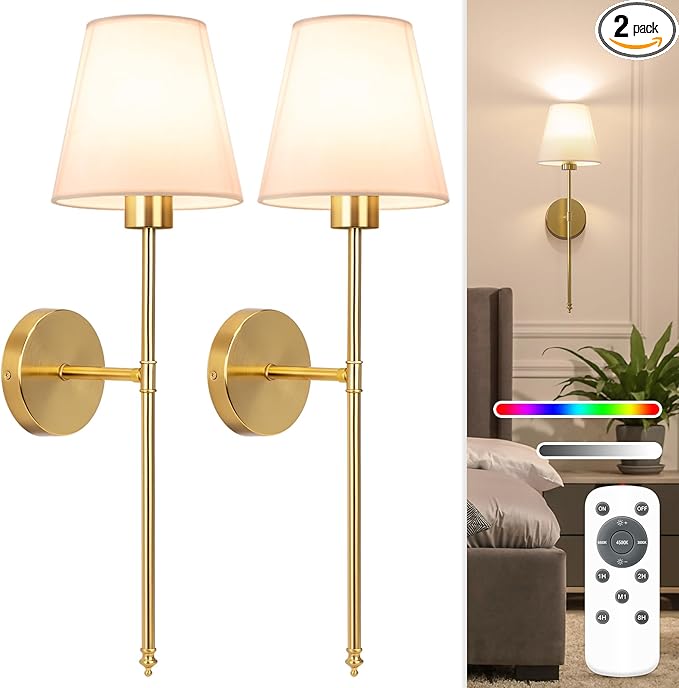
For a bedroom or entryway where a wall-mounted source makes spatial sense but an outlet is less conveniently positioned, the NIORSUN Battery Operated Wall Sconce Set of 2 solves the outlet problem entirely. These mount with two small drilled holes per sconce — a minor wall intervention compared to actual electrical work, and one that patches cleanly with spackle. Each sconce carries a 5200mAh rechargeable battery and runs for up to 72 hours on a low-brightness setting between charges. The light output of 300 lumens per fixture is soft enough for a bedside reading context, and the contemporary profile won’t read as an obvious tech gadget when they’re on the wall.
The practical difference between these two sconce options comes down to where you need light most. If you have a wall behind the sofa with an outlet within reach, the brass plug-ins create something that looks like it was always meant to be there. If you’re trying to light a hallway, a reading nook, or a headboard wall where outlet access is inconvenient, the battery-operated pair removes that constraint entirely.
The Floor Lamp as Primary Source
There is a reason that the floor lamp has remained a constant in small-space living for decades: it delivers a lot of light from a footprint that is easy to relocate, requires no installation, and can be placed exactly where the room needs it rather than where a builder decided to put a junction box.
The torchiere form — a tall pole lamp that directs light upward toward the ceiling, which then bounces back down as diffuse ambient light — is particularly well suited to low-ceiling rentals. By bouncing light off the ceiling rather than casting it downward, a torchiere avoids the harsh pools and deep shadows of a directional lamp. The ceiling becomes the light source, and the effect reads as daylight-adjacent rather than artificial.
The Floor Lamp, Upgraded 40W 4000LM Super Bright Torchiere LED is a straightforward entry in this category, and at $51.11 it is the most affordable piece here. The lumen output is genuinely high — 4,000 lumens is more than enough to light a standard rental living room on its own — and the remote control functionality means the lamp can live in a corner without requiring you to cross the room to adjust it. It also pairs with smart plugs for voice control, which is useful if you’re already working with a home automation setup.
For a more refined version of the same torchiere concept, the SIBRILLE Torchiere Floor Lamp adds meaningful control over the quality of light, not just the quantity. The ability to shift color temperature between 3000K — a warm, incandescent-adjacent tone — and 6500K, which is closer to overcast daylight, changes how the room reads at different hours and for different purposes. At 72 inches, it is proportioned for standard ceiling heights and won’t disappear visually in a room with any furniture scale to it.
Thinking About the Room as a System
The best rental lighting isn’t a collection of individual lamps — it’s a set of light sources that can be switched on in combination to produce different effects depending on the hour and the activity. A torchiere at full brightness on a cool color temperature for a Sunday morning of reading. The same lamp dialed down and warmed up alongside a pair of wall sconces for an evening dinner. A single bedside battery sconce for winding down.
This kind of layering is not complicated or expensive. It requires only that you stop thinking of the overhead fixture as the default and start thinking of it as the exception — the light you turn on when you need to find something on the floor, and then turn off again.
Rentals impose constraints. But the constraint of not hardwiring is, genuinely, a narrow one. Most of what makes a room feel lit well happens at outlet height and below, which is exactly the territory where these solutions work.
When you eventually move, everything comes with you. The brass sconces, the torchiere, the battery-powered pair — they travel to the next place and solve the same problem again, in a different room, under a different landlord’s fluorescent tube.
Shop the post
The pieces, sourced
NIORSUN
NIORSUN Battery Operated Wall Sconce Set of 2
$71.54 at time of writing
Rechargeable and hardwire-free, these mount with two small drilled holes rather than adhesive strips — a distinction that matters when you want them to stay level. The 300-lumen output per sconce is modest, which is exactly what you want from a bedside or entryway fixture.
Shop the piece →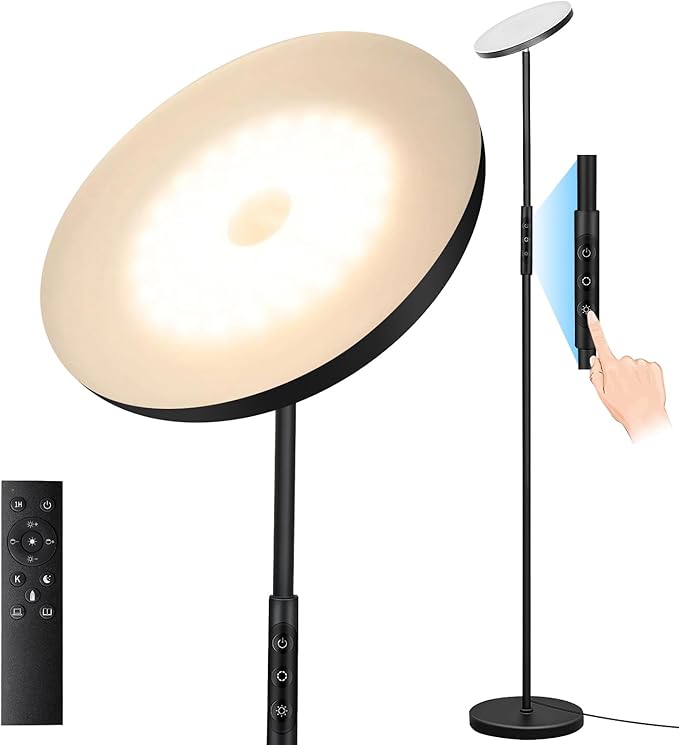
Floor Lamp, Upgraded 40W 4000LM Super Bright Torchiere LED Floor
$51.11 at time of writing
Four thousand lumens directed at the ceiling turns a dim rental living room into something livable without a single ceiling fixture. The fifty-foot remote means you can turn it off from bed, which sounds trivial until the first time you actually use it.
Shop the piece →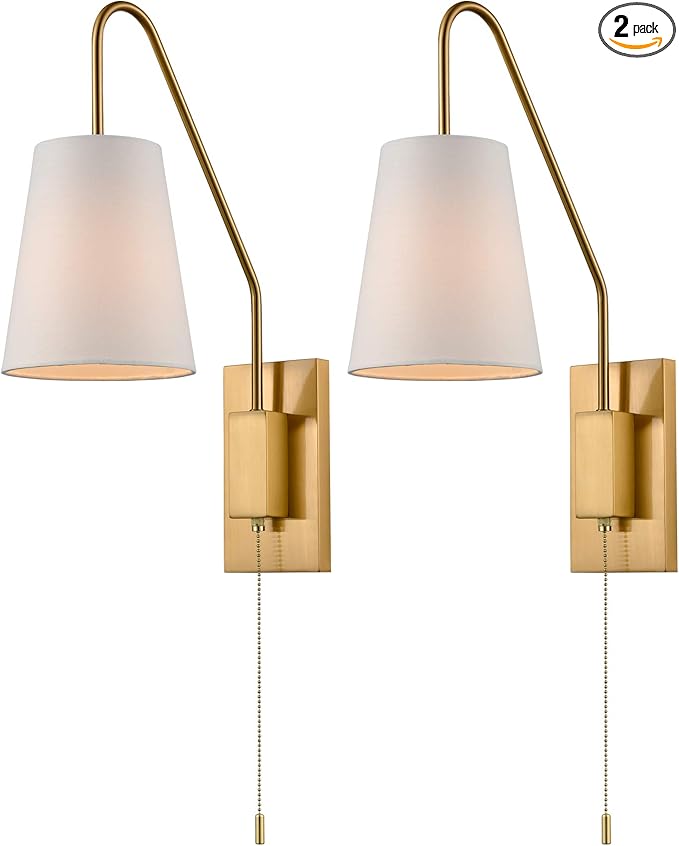
Modern Brass Plug-in Wall Sconces Set of Two Fabric Shade
$191.69 at time of writing
A fabric shade and a brass arm do a great deal of the visual work here — these read less like a workaround and more like a deliberate design choice. The cord drops to an outlet rather than disappearing into the wall, which requires some cable management but no lease negotiation.
Shop the piece →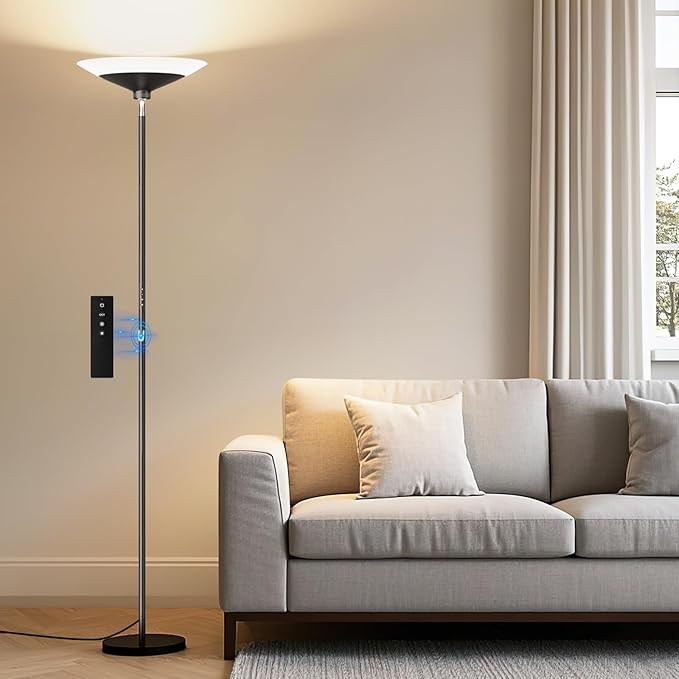
SIBRILLE Torchiere Floor Lamp
$76.67 at time of writing
Seventy-two inches tall and adjustable from 3000K to 6500K, this one earns its floor space by functioning as both an ambient source and a task light depending on the hour. The dual-zone control — brightness and color temperature independently dialed — is the kind of feature you don't realize you wanted until you have it.
Shop the piece →