rental friendly
Closet Organization Ideas for Renters Who Cannot Drill, Nail, or Commit
A practical guide to bringing order to rental closets without touching a single wall. Four storage solutions that work with what you have.
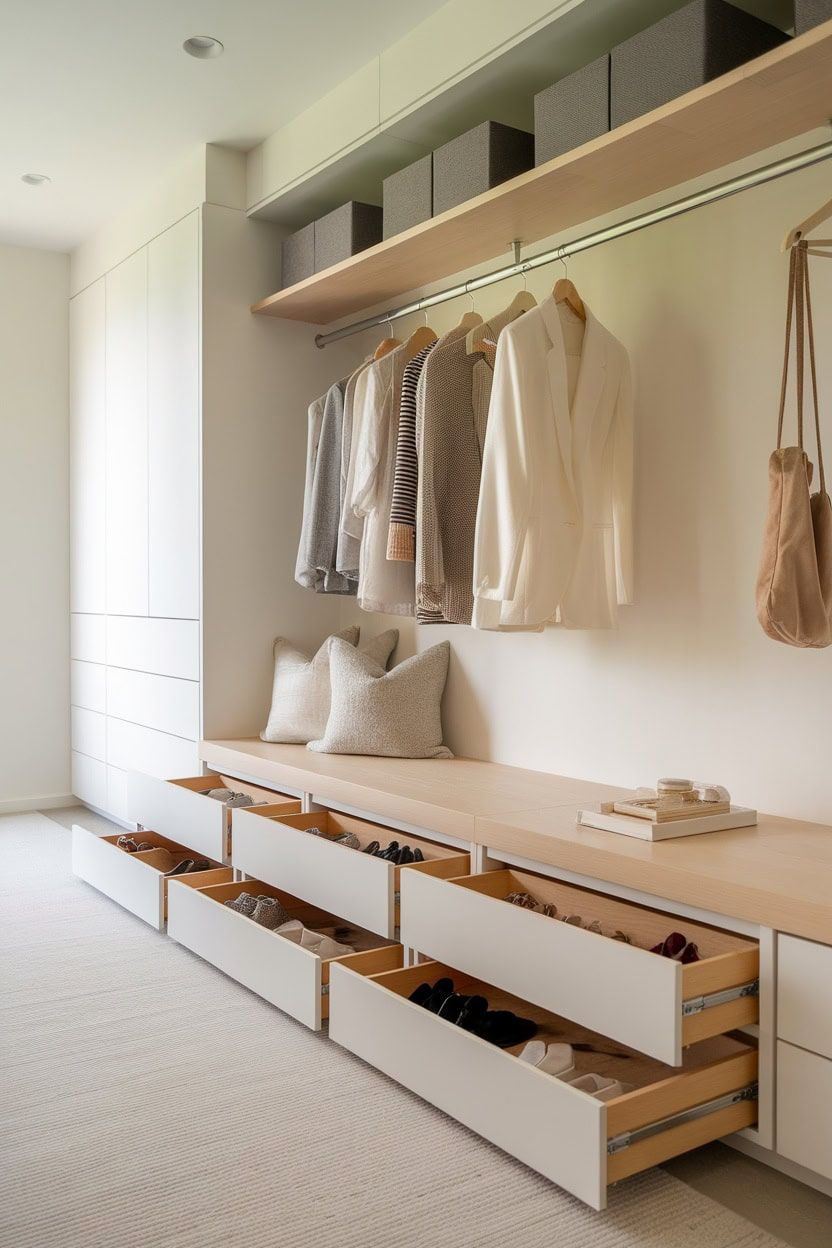
There is a particular kind of resignation that sets in when you open a rental closet for the first time. The rod is set too high or too low. There is one shelf, positioned at a height that serves no clothing category particularly well. The floor space is technically there but somehow unusable. You cannot mount a second rod, cannot add brackets, cannot do the thing the renovation accounts on the internet make look so effortless. The lease says no, and the deposit agrees.
What follows is not a workaround. It is a different way of thinking about the problem — one that treats the closet as a volume of air to be subdivided rather than a set of walls to be improved.
Start With What the Closet Already Has
Most rental closets share a basic anatomy: one hanging rod, one shelf above it, and a floor. That is not nothing. The rod and the shelf are fixed anchor points, and anchor points are where freestanding and hanging systems begin to do their best work.
The single rod is almost always underused in the vertical sense. Below it, in most apartments, there is a column of empty space that extends from the bottom of your shortest hanging garments to the floor. That column is where a Hanging Closet Organizer and Storage 3-Shelf earns its keep. The organizer clips directly onto the rod and hangs down into that negative space, adding three shelves of Oxford cloth fabric that can hold folded sweaters, clutches, gym shoes, or anything else that has been living on the closet floor because there was nowhere else to put it. At a hair under twelve inches wide, it occupies a modest slice of the rod without displacing much hanging clothing. The fabric is a heavier 600-denier weave, which matters in practice — softer non-woven organizers have a tendency to sag and tilt after a few months of real weight.
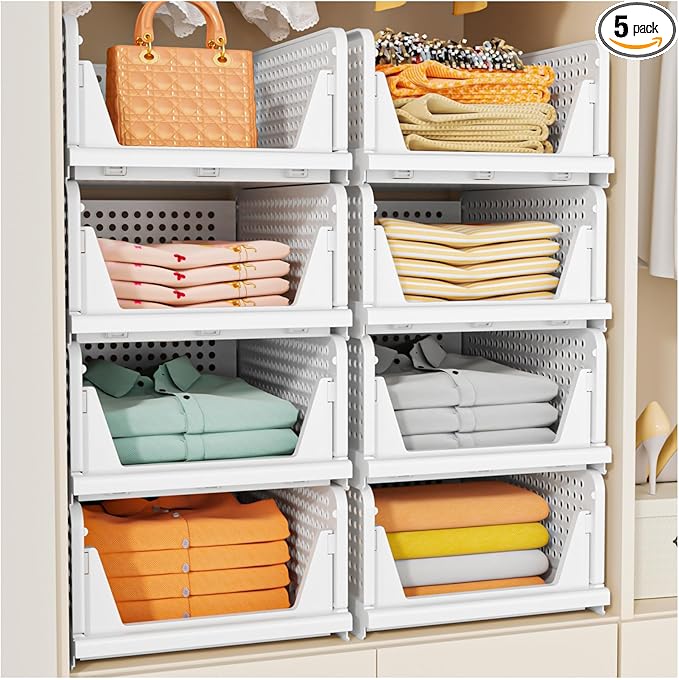
The shelf above the rod is often shallow and awkward for tall items, but it is ideal for a row of open-front baskets. The SNSLXH 5 Pack Stackable Closet Storage Basket works well in this position because the open front means you can see and retrieve what is inside without pulling the whole basket down. More useful is the fact that they stack: if the shelf is deep enough, or if you place them on a low floor section, you can build a two-tier column that doubles the volume without adding footprint. The five-pack provides enough units to cover a single shelf end to end in most standard closets, leaving room for the occasional taller item at one end. Seasonal accessories, extra linens, the cables you cannot bring yourself to throw away — these are the categories that live here.
When the Closet Is Not Enough
Some apartments assign closet space in a way that bears no relationship to how people actually dress. A studio with a single shallow coat closet. A bedroom with a reach-in that was clearly designed for a person who owns twelve garments. In these situations, the closet is a starting point, and the room itself has to carry the rest.
A freestanding clothes rack is often rejected on aesthetic grounds before its practical merits get a fair hearing. The assumption is that it will look temporary, like a staging area rather than a storage solution. This depends almost entirely on how it is used and what it is made of. The VIPEK V5 Heavy Duty Clothes Rack is large enough — 69 inches long, 76 inches tall — to function as the primary wardrobe in a room that lacks a proper closet. The height clears the floor of clothing, the width accommodates a full season’s worth of hanging items, and the weight of the frame means it reads as furniture rather than improvisation. Placed along an empty wall and kept to a consistent color palette of hanging items, it becomes less of an eyesore than a cluttered closet with a closed door.
For a rental, the argument for a rack is partly spatial and partly philosophical. You are not investing in the apartment; you are investing in a system you can take with you. When the lease ends, the rack moves. Nothing was drilled, nothing was patched, and the security deposit remains intact.
The Floor of the Closet Is Storage Too
The closet floor is where good intentions go to die in most rental apartments. Shoes pile up in no particular order. Bags collapse on each other. The things that do not fit anywhere else settle there by default. Part of the problem is that most closet floors lack defined zones, so items expand to fill the space randomly.
A narrow drawer unit changes this dynamic. The LASZOLA 5 Drawer Narrow Dresser is slim enough to stand inside most reach-in closets without consuming the full floor width, leaving the remaining floor area for shoes or a small basket. Five drawers handle the folded items that wire shelves and open baskets tend to eat — socks, underwear, workout gear, anything that needs to be contained to be findable. Pulling a drawer is categorically faster than unfolding a stack to find what is at the bottom.
The dresser also solves a secondary problem. In small apartments, bedroom furniture competes with every other function the room has to serve. Moving a five-drawer unit inside the closet, even partially, frees up wall space in the room for something that breathes better. The closet door closes, and the room looks less like a storage unit.
The Case for Modularity
Every solution here is modular in the most useful sense: none of them require professional installation, none of them alter the apartment, and all of them can be reconfigured or moved when circumstances change. The hanging organizer comes down in seconds. The stackable baskets separate and reassemble. The dresser rolls or carries out. The rack disassembles flat.
This is the hidden advantage of renting that almost no one talks about. Owning a home comes with the freedom to modify the space, but also with the weight of permanence. A built-in closet system is committed to the wall; it cannot follow you when the neighborhood changes or the lease on the next place is too good to pass up. Freestanding and hanging systems can. They accumulate knowledge about how you live — what you reach for daily, what lives seasonally in a basket, how much hanging space a wardrobe actually needs — and that knowledge transfers.
A closet that cannot be drilled into is still a volume of cubic feet waiting to be organized. The constraint, worked with rather than against, has a way of producing solutions that are more honest about how the space is actually used. The rental limitation becomes, in practice, a design discipline.
Shop the post
The pieces, sourced
SNSLXH
SNSLXH 5 Pack Stackable Closet Storage Basket
$45.96 at time of writing
Five open-front baskets that lock together vertically, so they grow with your shelving rather than fighting it. The stackable design means you can reconfigure the whole column when your storage needs shift.
Shop the piece →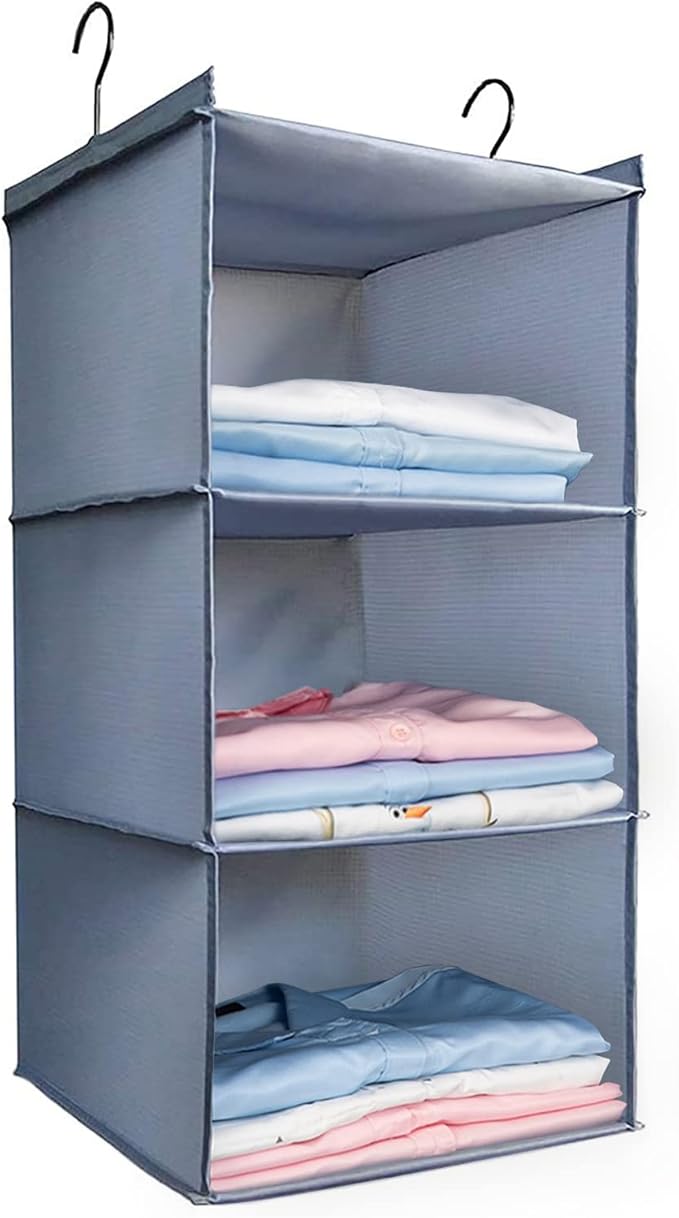
Hanging Closet Organizer and Storage 3-Shelf
$11.49 at time of writing
Three shelves of 600D Oxford cloth that clip onto an existing rod and take up eleven inches of horizontal space. It is the kind of addition that turns dead air below hanging clothes into actual real estate.
Shop the piece →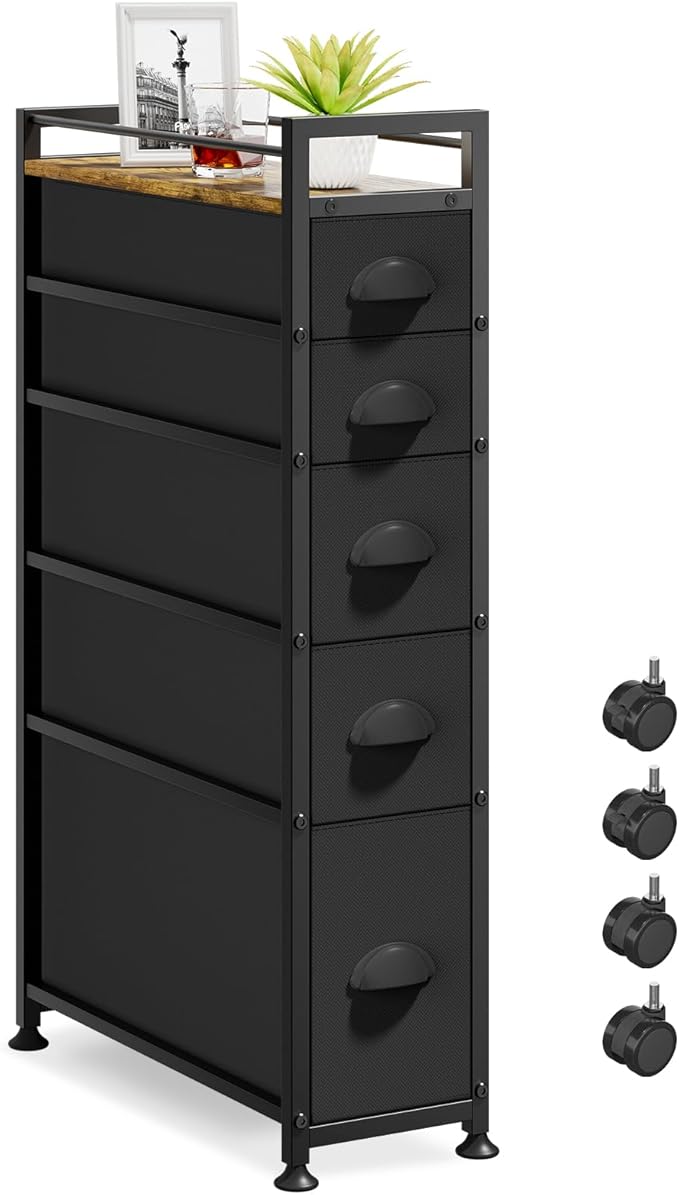
LASZOLA
LASZOLA 5 Drawer Narrow Dresser Slim Cabinet Skinny Storage
$63.25 at time of writing
A five-drawer tower narrow enough to stand inside a closet footprint or beside a door without blocking a path. It handles the folded clothing that baskets and shelves tend to swallow whole.
Shop the piece →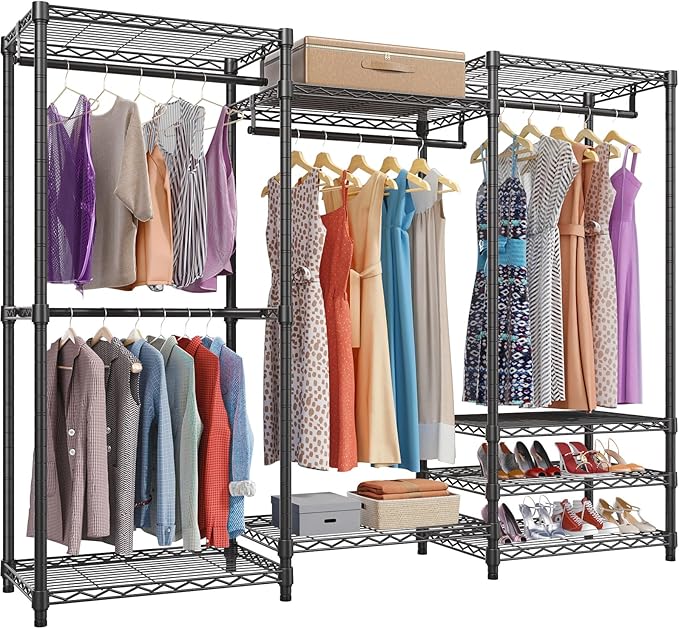
VIPEK
VIPEK V5 Heavy Duty Clothes Rack
$149.51 at time of writing
A freestanding rack nearly six and a half feet tall with a 69-inch hanging rail, sized to hold a full wardrobe without leaning on a single surface it does not own. The frame is heavy enough that it does not skitter when you pull a hanger.
Shop the piece →