bedroom
How to Anchor a Bedroom Without a Real Headboard
Headboards are expensive, hard to move, and often difficult to mount in a rental. These four alternatives give a bed its visual anchor without the commitment.
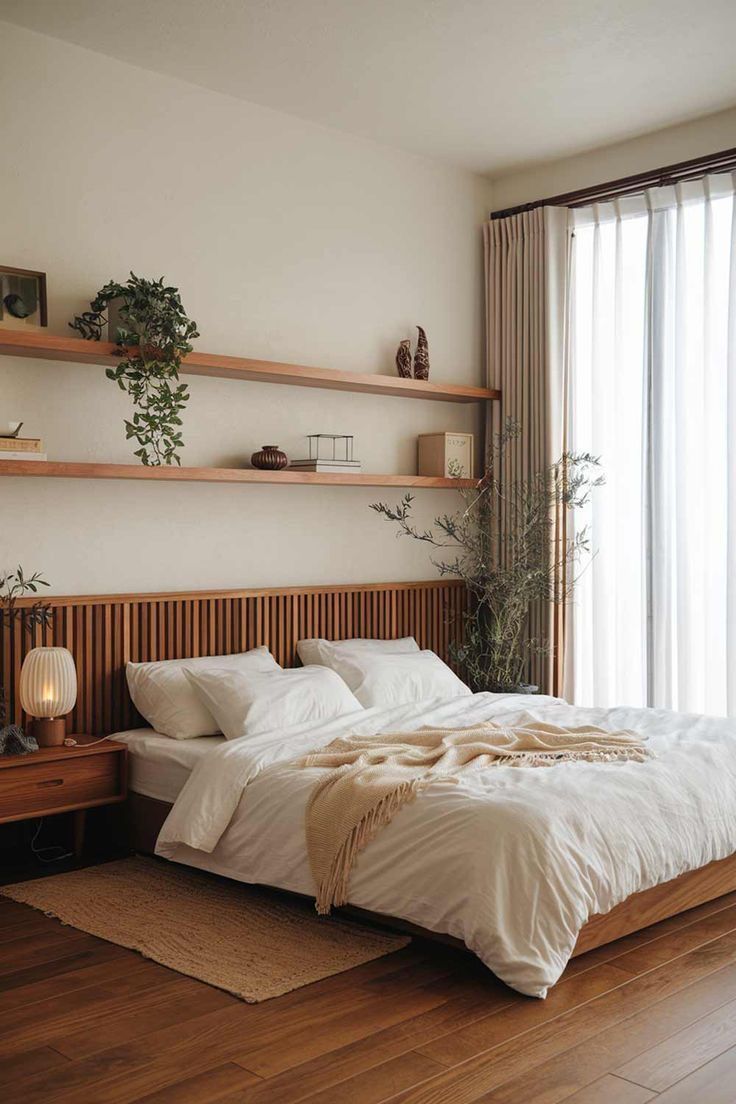
A headboard solves a specific visual problem: it tells the eye where the bed ends and the wall begins. Without one, the bed can look like it drifted there accidentally — a mattress waiting for furniture to arrive around it.
But most headboards are designed for owned spaces. They’re heavy, often wall-mounted, and sized to one bed frame in one room. In a rental, or in an apartment where the bedroom moves every eighteen months, that kind of commitment doesn’t make sense.
The alternatives below achieve the same visual result without the weight — literal or logistical.
A textile above the bed
A large woven wall hanging is the most versatile of these approaches. It provides texture at the right height, softens the hard line where wall meets ceiling, and requires two small nails rather than a drill. When the lease ends, it rolls up and moves with you.
Scale matters here. The piece should be at least two-thirds the width of the bed — narrower and it looks like an afterthought. Hang it so the bottom sits roughly six inches above the pillows when the bed is made.
Floating shelves at pillow height
The reason a headboard works is partly visual, but also partly functional: it gives you somewhere to lean, and it frames the small objects that accumulate beside a bed. Two floating shelves mounted at matching heights on either side of the bed do both.
Use them as nightstands. A lamp on each, a book, the usual. The bed becomes flanked and therefore defined — which is what the headboard was doing all along.
A canopy as architecture
A sheer canopy hung from a single ceiling hook creates what feels like a room within a room. The bed canopy pools around the mattress and draws the eye up, making the ceiling feel taller. It also addresses the headboard problem in reverse: instead of anchoring the top of the bed to the wall, it hangs the whole sleeping zone from the ceiling.
One hook, a few minutes, and the effect is pronounced enough that it registers as a design decision rather than a workaround.
Light as the last layer
A bed with nothing above it reads as unfinished. A bed with warm string lights running along the wall above it reads as considered. This sounds like a small distinction; in practice it changes how the room feels to be in after dark, which is most of the time a bedroom is used.
Run them along the top edge of the wall, attached with the small adhesive clips that usually come in the box. The USB cable tucks behind the bed frame.
None of these are permanent. That’s the point. A rental bedroom that looks intentional without a single permanent fixture is a more useful skill than knowing which headboard to order — because it transfers to the next apartment without having to start over.
Shop the post
The pieces, sourced

Decocove
Large Macrame Wall Hanging, 35-in.
$39.99 at time of writing
Textile above a bed does what a headboard does — defines the top of the sleeping zone — while weighing almost nothing and folding flat for a move.
Shop the piece →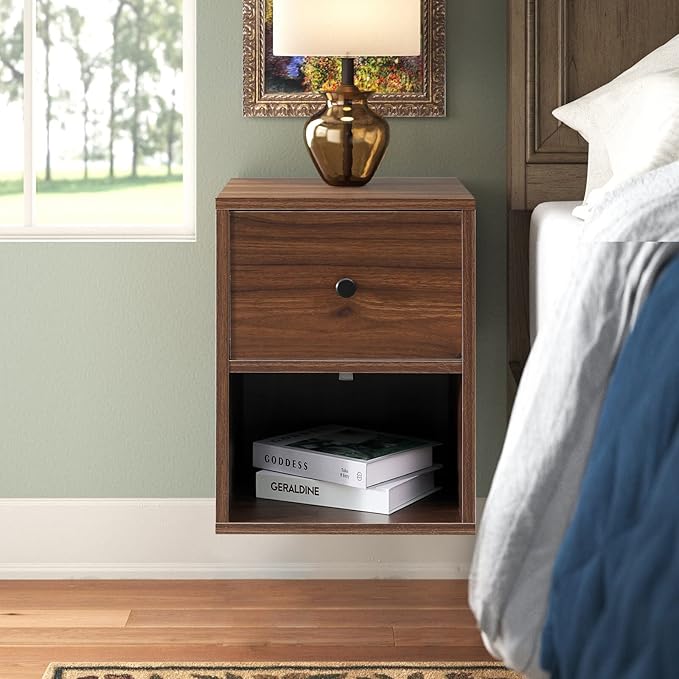
Laptain
Floating Nightstand Shelf with Drawer, Set of 2
$35.99 at time of writing
Mount at pillow height, one on each side. A lamp, a book, a glass of water — the nightstand function without the floor footprint.
Shop the piece →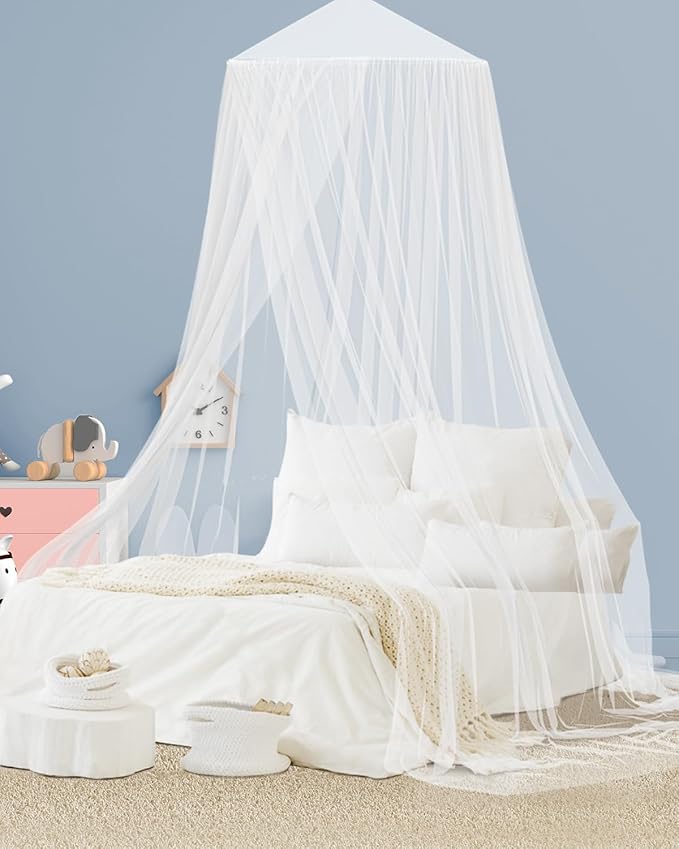
Aoresac
Sheer Bed Canopy, White
$27.99 at time of writing
Hooks to a single ceiling hook and drapes around the bed. The enclosure reads as architectural intention, not improvisation.
Shop the piece →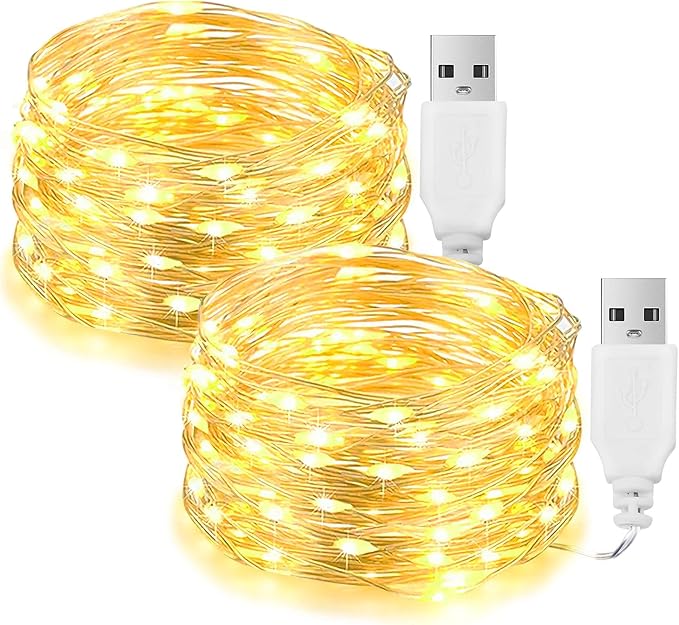
EvaStary
USB Warm String Lights, 33ft, 2-Pack
$12.99 at time of writing
Run along the top edge of the wall or across the ceiling above the bed. The warmth of the light does more for a bedroom atmosphere than most fixtures.
Shop the piece →